We firmly believe healthcare students should have access to the best possible resources to equip them with the skills and experience they need to become capable, confident practitioners.
This means bringing curriculums to life in a way that is interesting, engaging, and prepares them for the real-world scenarios they might face, but in a safe and controlled environment. Medical task trainers and simulators are a key part of that – enabling students to repeatedly practise care-based and clinical tasks until they master them, and simulators for facilitating the role-play of different situations.
The challenge for healthcare educators is to find the right medical training tools for each stage of the learning journey, within budgets. Our product range is carefully curated to help them do just that.
As a leading provider of medical equipment for over 100 years, our biggest focus has always been on quality, realism, and durability, whether that’s products we manufacture ourselves, or those we source from other companies.
We only supply products that are developed using the same care and attention to detail that we adopt when manufacturing in-house.
We’re selective over who we work with, and ranges are put together to ensure that customers always get maximum value, regardless of the job an item needs to do, or the price point.
A commitment to realistic, high-quality healthcare models
One of our long-standing partners is VATA.
Like us, VATA is committed to providing customers with realistic, high quality healthcare models by staying as true to life as possible.
The Canby, Oregon US-based business constantly seeks and implements feedback from clinicians to enhance the educational experience and improve patient care.
We share the belief that the most effective teaching aids are designed in partnership with the medical professionals who will be using them.
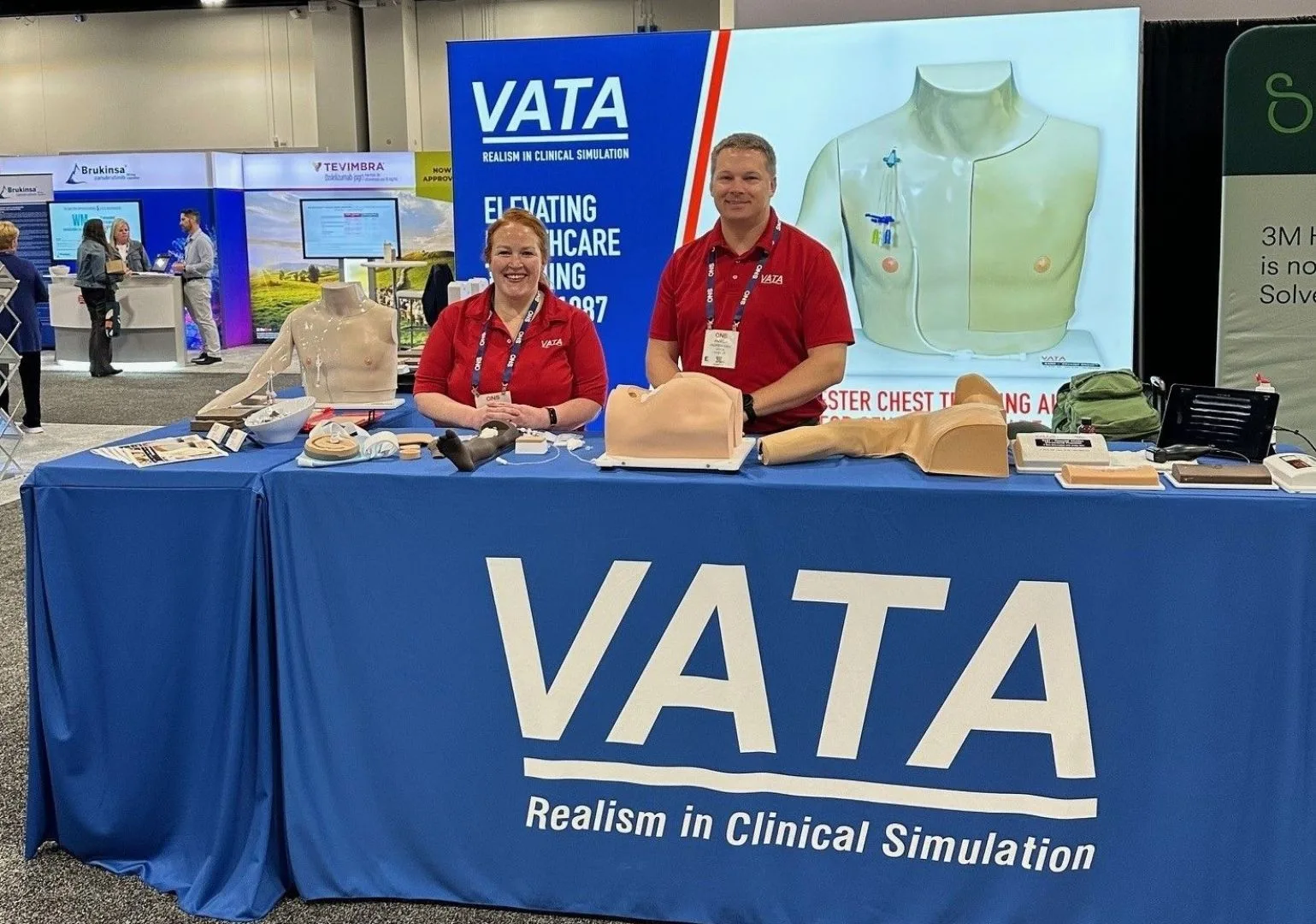
Like Adam,Rouilly VATA is also a family-run business. It was established in 1987, with a single product – Chester Chest™ – when founder, Tom Call, saw a gap in the market for medical students to be able to practise using venous access devices.
It now makes a wide variety of products across infusion, suture/surgical, ultrasound and wound care, allowing students to sharpen their skills before working with real patients.
Adam,Rouilly Director of Sales & Marketing, Tariq Shahab, said: “We’ve been working closely with VATA since 1999, and over the years, our customers have always been impressed by the quality of VATA training manikins.
“Their range offers training opportunities for a number of important, niche skills such as insertion and management of central venous catheters (CVCs) and peripherally inserted catheters (PICCs), bone marrow biopsy, intraosseous injection, and many more.
“The care and attention taken to create a realistic simulation experience is of paramount importance to Adam,Rouilly and we truly value being able to include VATA products in our range.”
We sell over 150 items from VATA. Among the most popular are those which teach the use of vascular access devices and soft tissue blocks , to using lifelike torso and leg models.
Here’s a closer look at some of the top VATA models.
Port – Body in a Box
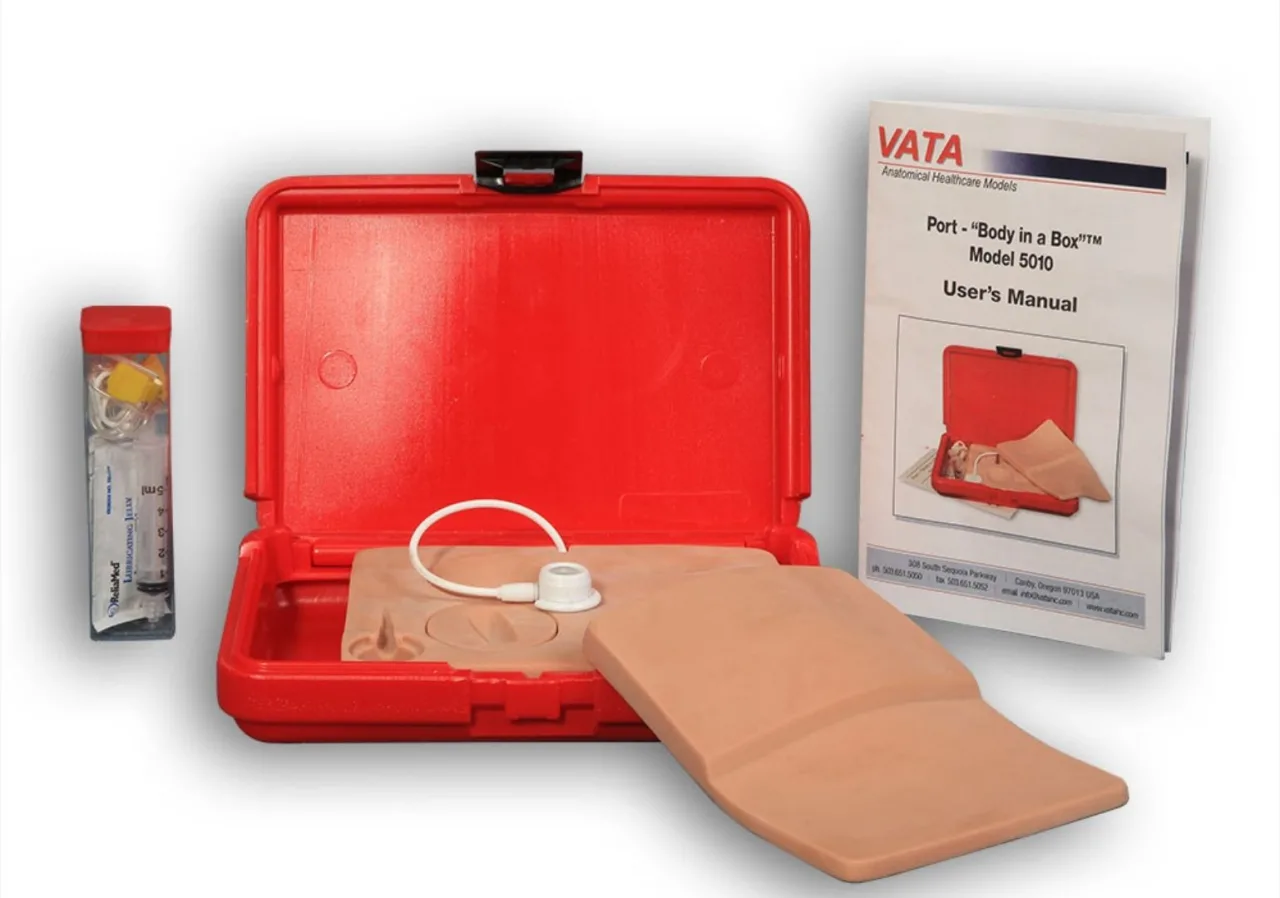
This compact, lightweight ‘body in a box’ is an incredibly easy-to-use port access training model for palpating and accessing vascular access devices (VADs).
It can be used in or out of the case and is brilliant for helping students develop the initial skills and hand-eye coordination needed for accessing VADs.
Port – Body in a Box can be used to simulate ports that are deeply placed, tilting or tipping, wandering, or shifting. Successful access is confirmed by a blood return, from a 35cc blood reservoir bag tucked neatly inside the tissue block.
The skin flap is made from the lifelike Dermalike™ material and has two thicknesses. The underlying soft tissue block allows the port to ‘float’ for added realism.
This task trainer comes with a real port with a 9.5 FR catheter.
Shop the Port – Body in a Box here.
Advanced Four Vein Venepuncture Training Aid
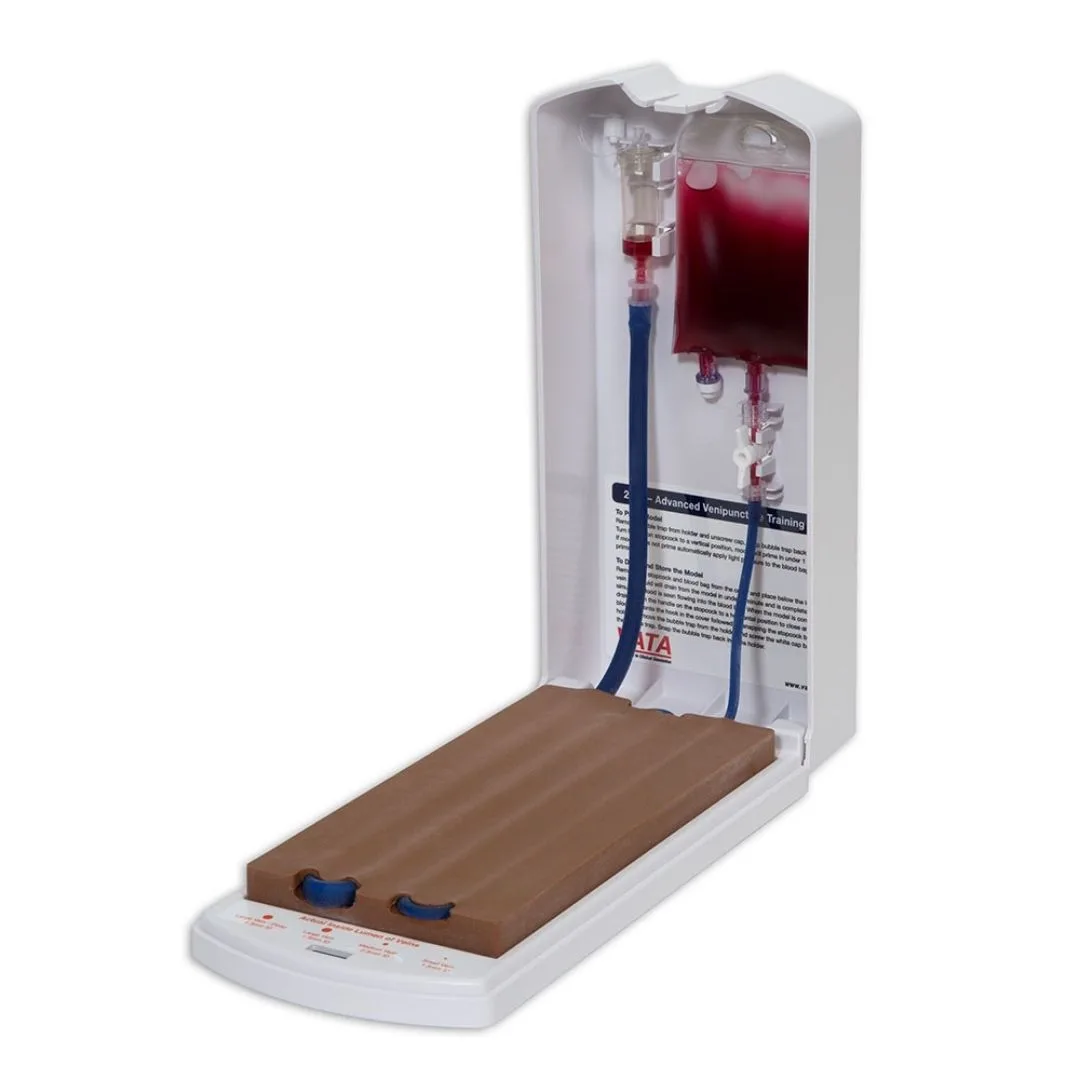
This is the perfect IV training model, closely mimicking what it’s like to insert an IV catheter in a real patient.
It features four barely discernible blue veins in three different sizes, with one deeply placed for added difficulty.
The latex-free Dermalike™ skin material results in less drag when accessing underlying veins and improved tear resistance, which further boosts the durability and longevity of this trainer. It can handle an impressive 3,600+ needle insertions.
As the IV catheter enters the vein, a realistic ‘flashback’ of simulated blood confirms needle placement. Repetitive practise on this robust model helps students build the hand-eye coordination, confidence and competence needed to insert an IV catheter.
Want to know more? Visit the Advanced Four Vein Venepuncture Training Aid page here.
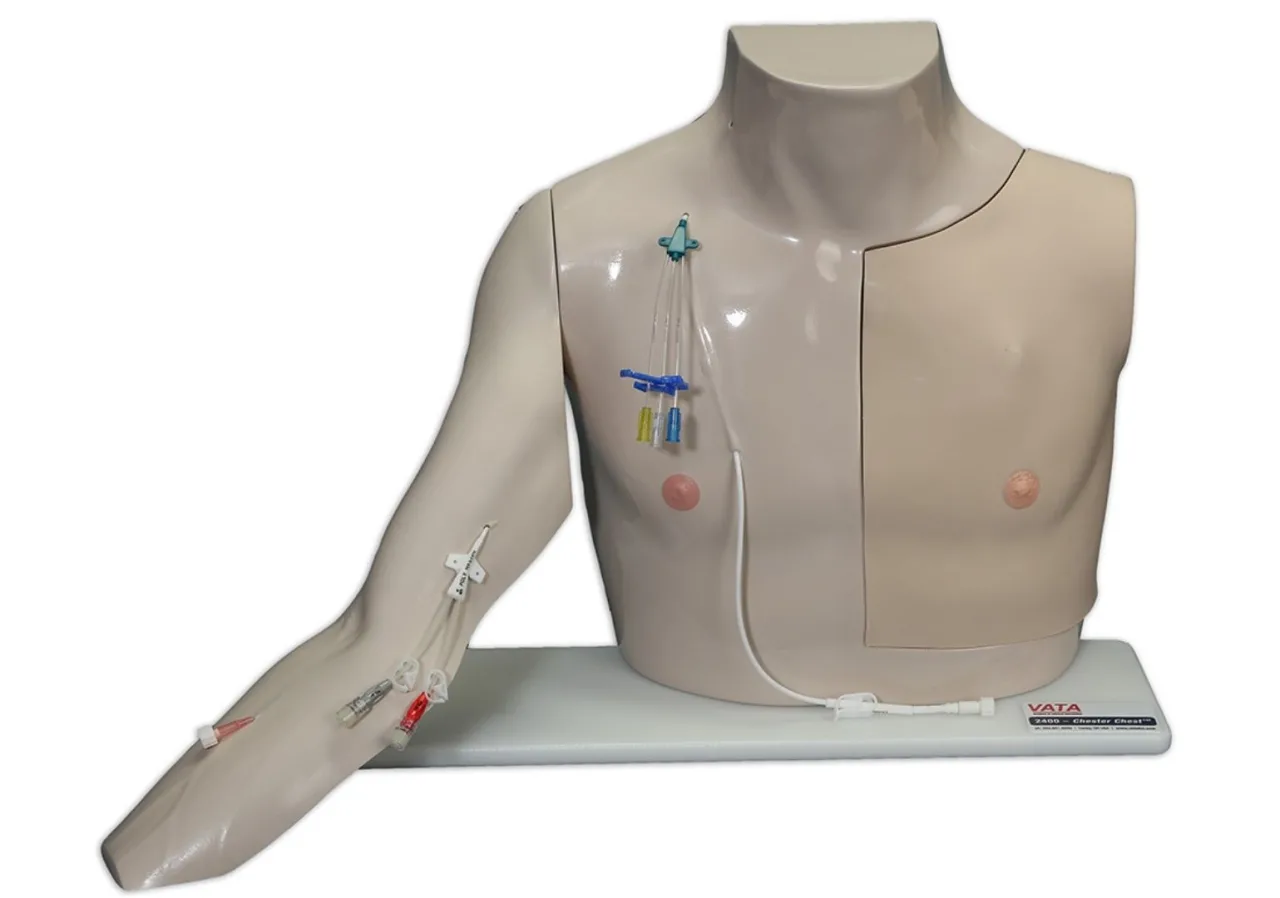
Chester Chest™ Model with Standard Arm and Carrying Case
Some 40 years after first being invented, Chester Chest™ models remain among the most popular items in our VATA range.
This particular Chester Chest™ human torso with a detachable right arm is perfect for moving on to the next stage of learning, and teaching students how to confidently use the most common types of VAD on a lifelike model.
These include central venous catheters (CVCs) and peripherally inserted catheters (PICCs).
Students can practise fluid infusion, blood withdrawal, dressing change and securement techniques.
The model has been carefully designed to mimic the look and feel of human tissue and has several access points in the chest and arm. The dual PICC and IV catheter are attached to a simulated blood bag for fluid withdrawal and infusion.
You can check out all the features and details of the Chester Chest™ Model with Standard Arm here.
Penny Paediatric Intraosseous Leg
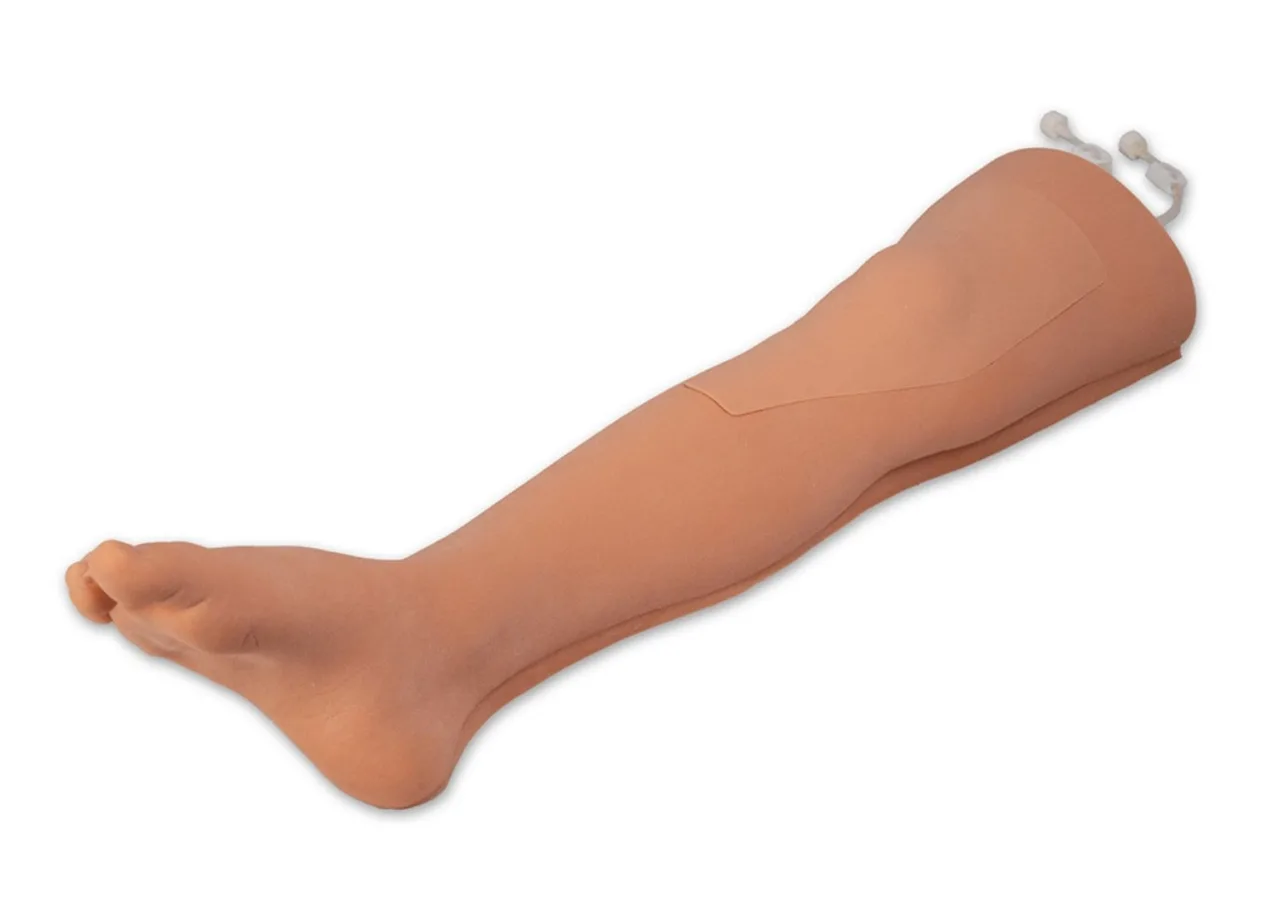
The amazing Penny is an ultra-realistic simulator – the first and only intraosseous (IO) paediatric trainer that allows access to both the distal femur and proximal tibia.
Designed with anatomical accuracy and lifelike materials, Penny delivers an incredibly authentic training experience in a safe environment.
The skin is moulded from a three-year-old’s leg using high quality materials for a realistic feel and palpable patella.
It has six sets of reversible femur and tibia bones, with up to eight access points per side of each bone, and features more than 190 access attempts right out of the box.
Intraosseous trainers can help students improve their accuracy and proficiency, while reducing their costs, thanks to Penny’s replaceable components and long-lasting base.
Find out more about Penny Paediatric Intraosseous Leg here.
Vinnie Venous Insufficiency Leg
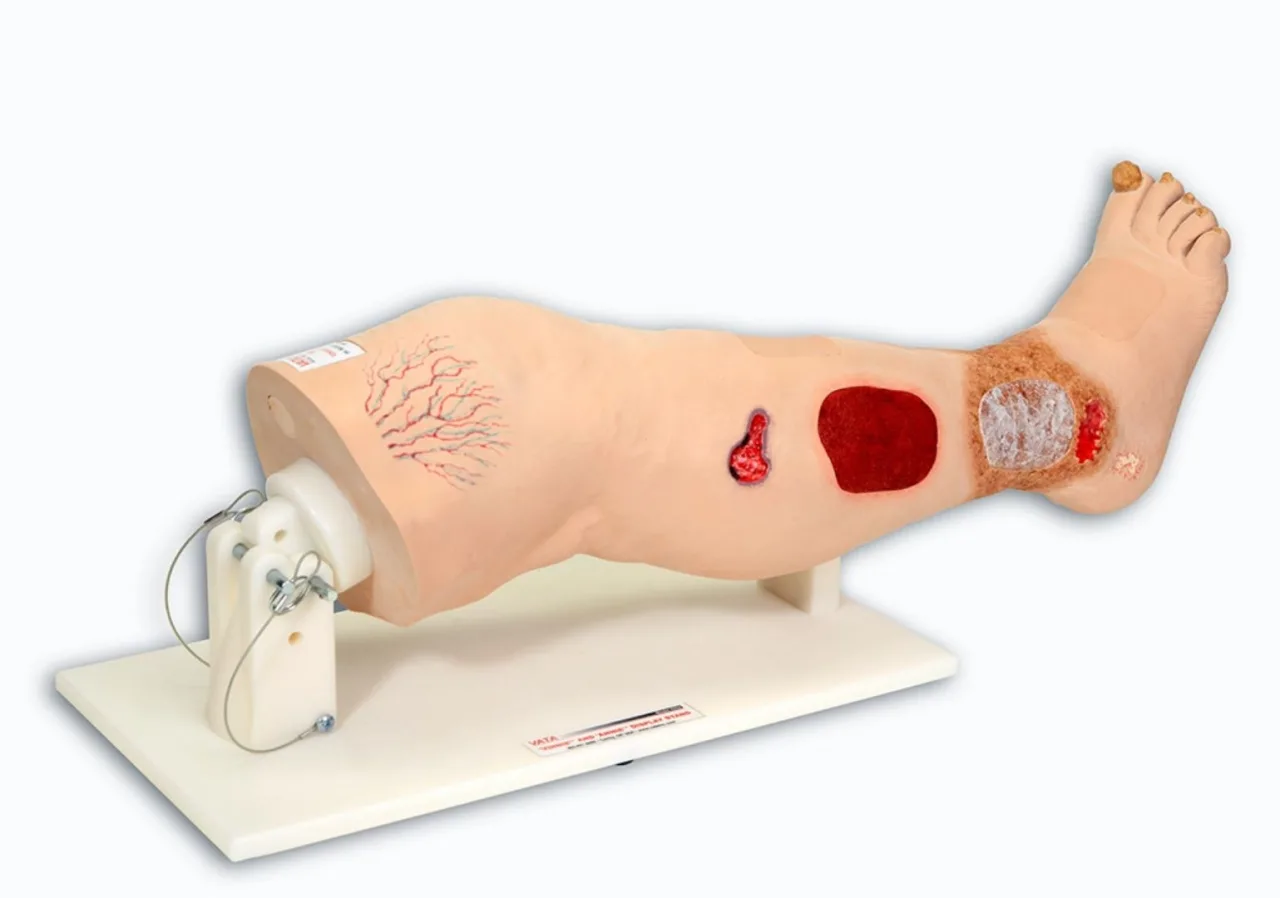
For vascular education programmes, VATA’s Vinnie leg is a lifelike medical training model designed to demonstrate and teach the clinical features of chronic venous insufficiency.
Modelled from an actual patient, Vinnie presents a variety of conditions including venous ulcers, cellulitis, stasis dermatitis, varicose veins, vasculitis, maceration, pitting oedema, fungal thickened toenails and more.
This makes it an excellent visual aid for showing what can happen without proper care, and enables students to correctly identify and treat a range of painful conditions.
To take learning a step further, Vinnie features a QR code which links to a library of Arterial Doppler Sound recordings that can be played, including monophasic, biphasic, triphasic and venous.
The top of the leg also has a unique swivel fixture which allows it to be rotated a full 360 degrees, making it easier for everyone to see in a group teaching session.
For all the details and specifications, visit the Vinnie Venous Insufficiency Leg page.
Annie Arterial Insufficiency Leg
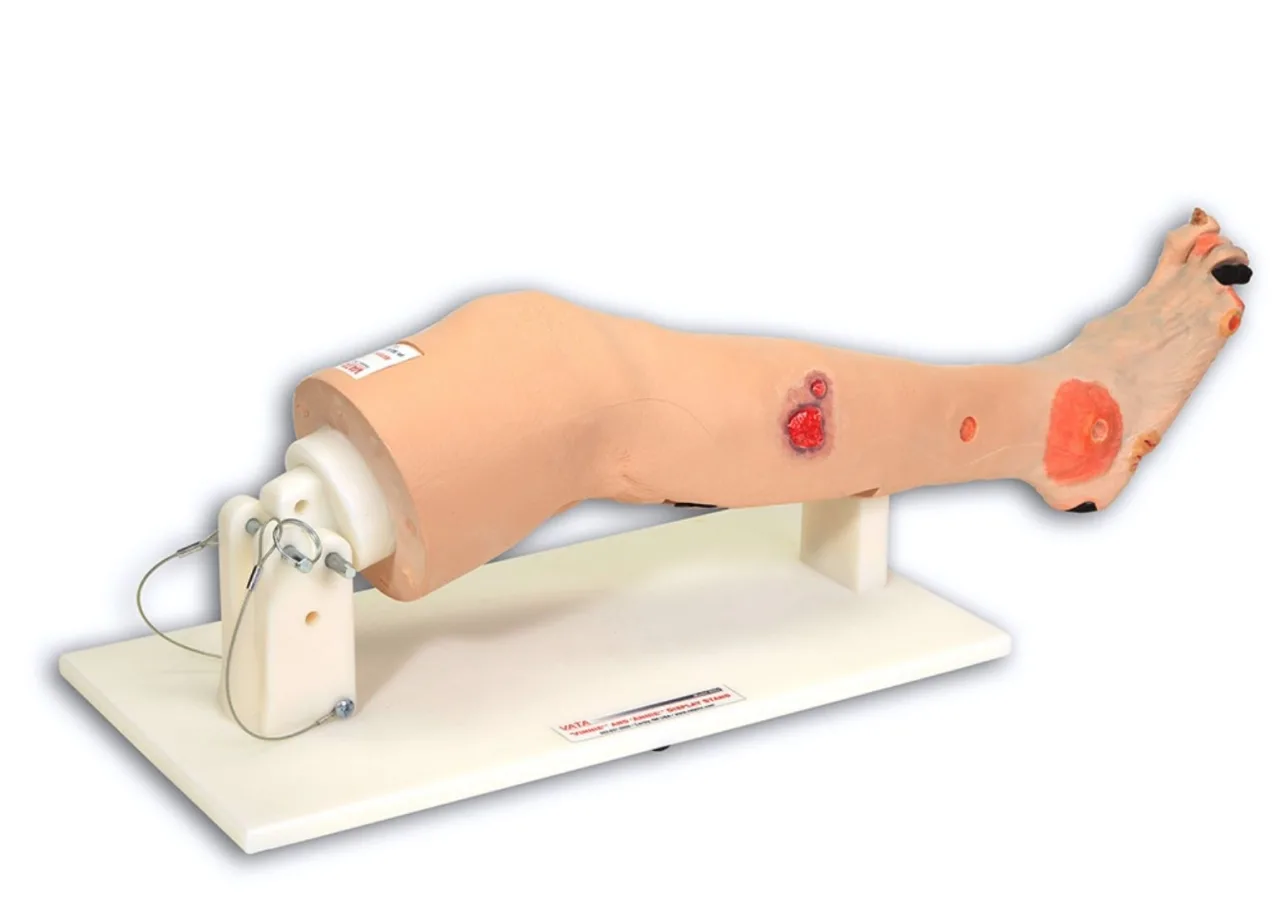
Similar to Vinnie, but focusing on arterial insufficiency and peripheral arterial disease, is Annie. This is another incredibly realistic looking leg, teaching students how to identify and treat a variety of conditions including arterial pressure injuries, necrotic toe, cellulitis, mottling, pyoderma gangrenosum, amputated toe, and more.
Annie was also modelled from an actual patient leg and mimics the look and feel of human skin and tissue.
Long-lasting and durable, it allows students to practise and get comfortable dealing with a range of conditions, before being faced with them in real life.
The conditions represented are based on feedback from wound care professionals.
Stan™ Stage 4 Pressure Ulcer Model
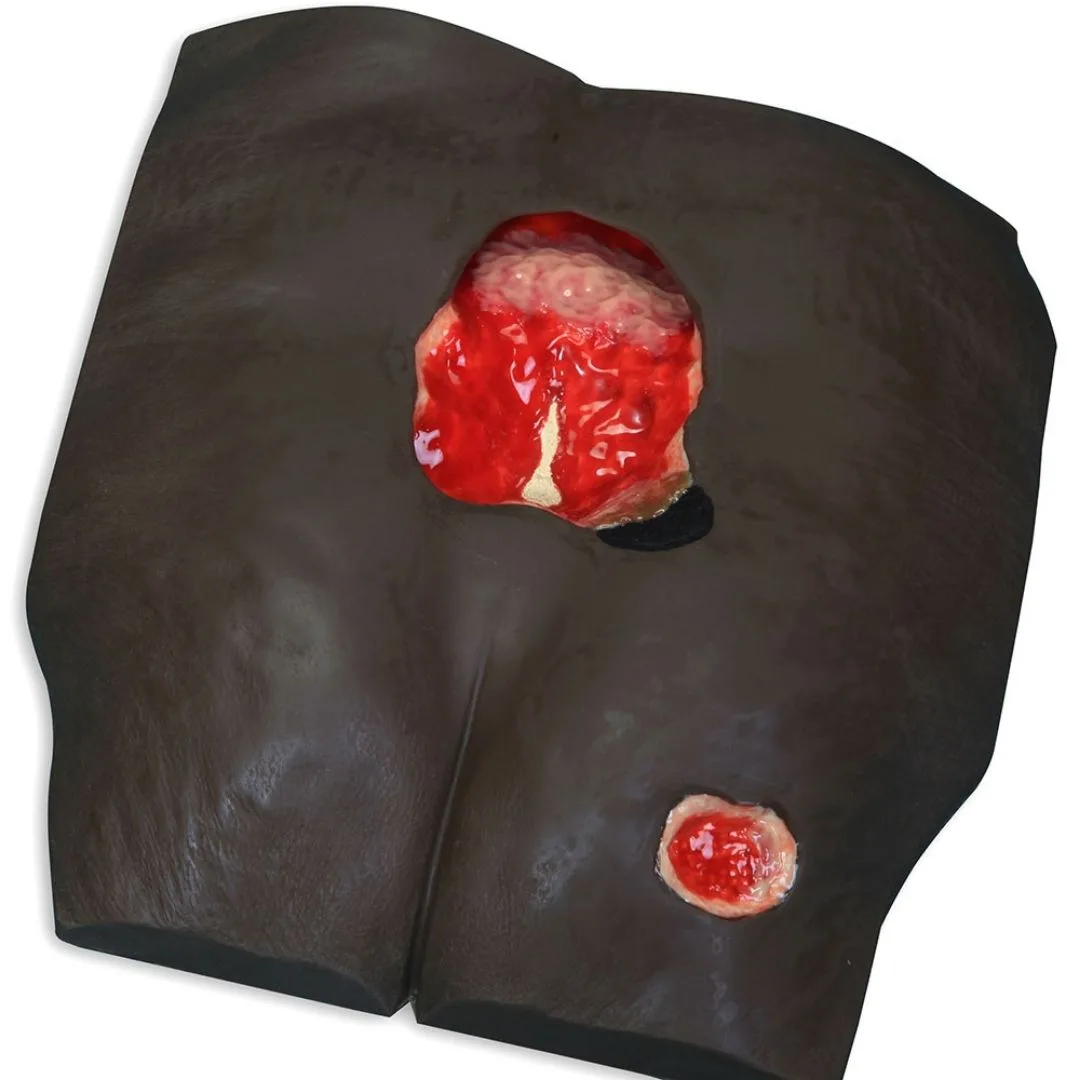
This small, lightweight model helps medical educators teach students how to classify, clean, dress and treat stage 3 and 4 pressure wounds with subcutaneous fat and granulation tissue.
Hand-painted wounds are designed to imitate real-life as closely as possible, while the unique material permits the application and easy removal of dressings.
The model also features eschar, undermining, tunnelling, slough, and exposed bone with osteomyelitis.
It’s perfect for teaching students how to measure, classify, cleanse and treat wounds, and how to prepare them for treatment with a negative pressure wound therapy device.
Find out everything you need to know about Stan Stage 4 Pressure Ulcer Model here.
To find out more about items in the VATA range, or for help building your medical training programme inventory, please get in touch with our expert Sales Team who will be happy to help.