
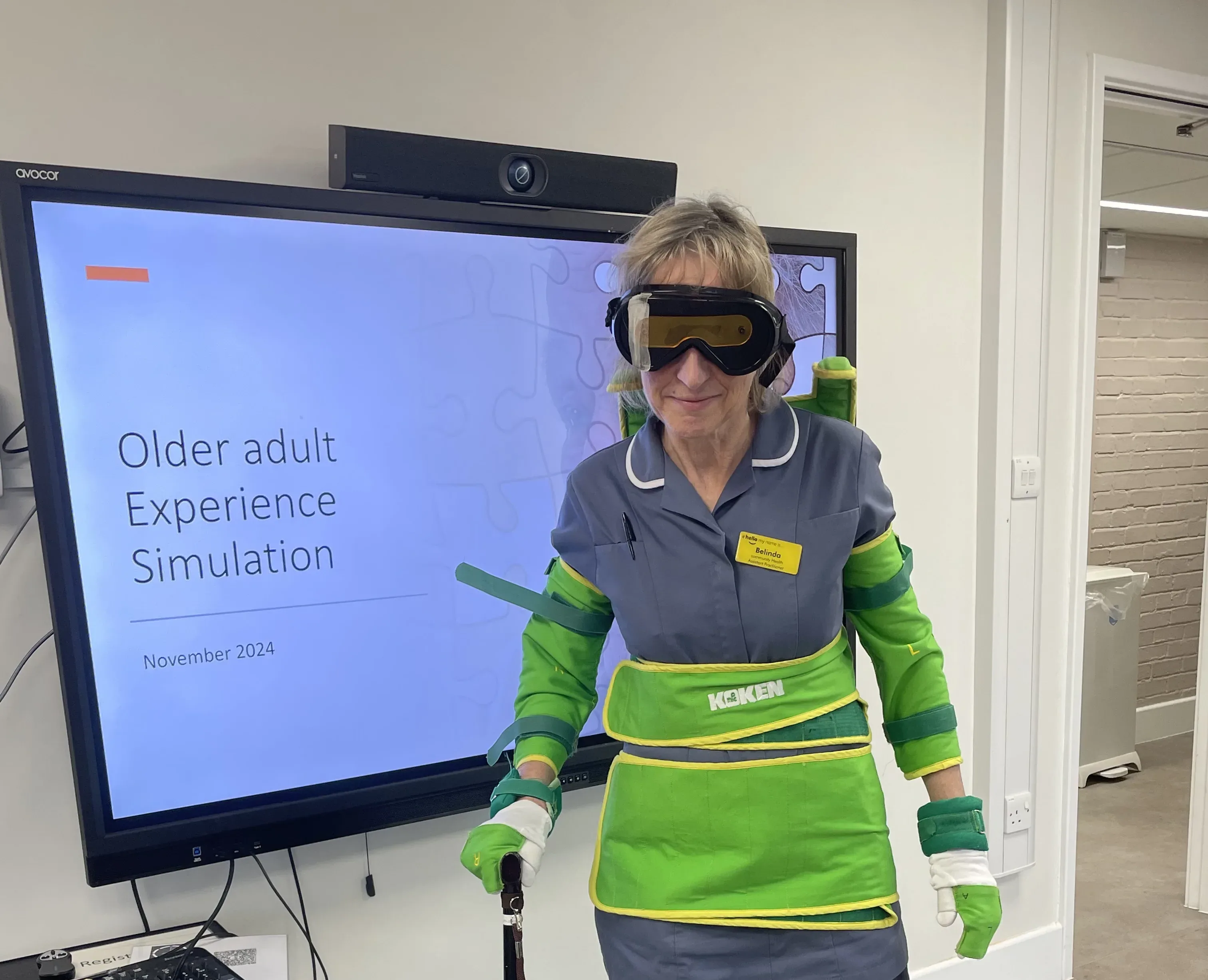
Community-based healthcare professionals who work with older adults are gaining a deeper understanding into how they can support their patients to remain safely at home, thanks to a new simulation training programme.
Using the Koken Age Simulation Suit, occupational therapists, physiotherapists, paramedics, nurses and healthcare support workers have been able to quite literally put themselves in the shoes of the people they help.
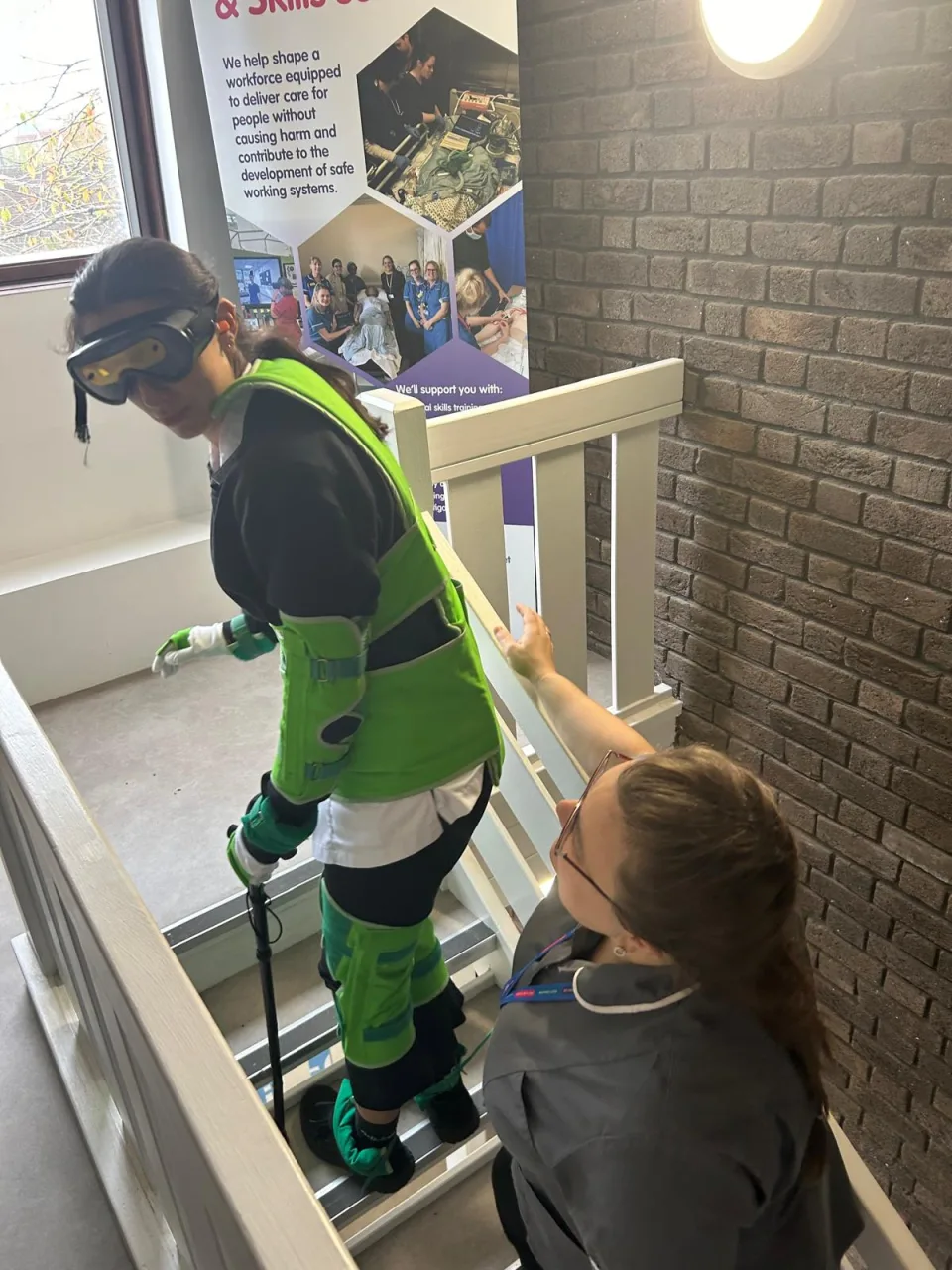
By wearing the suit, they are gaining unique insights such as:
- How tiring it can be to move around with a stooped posture
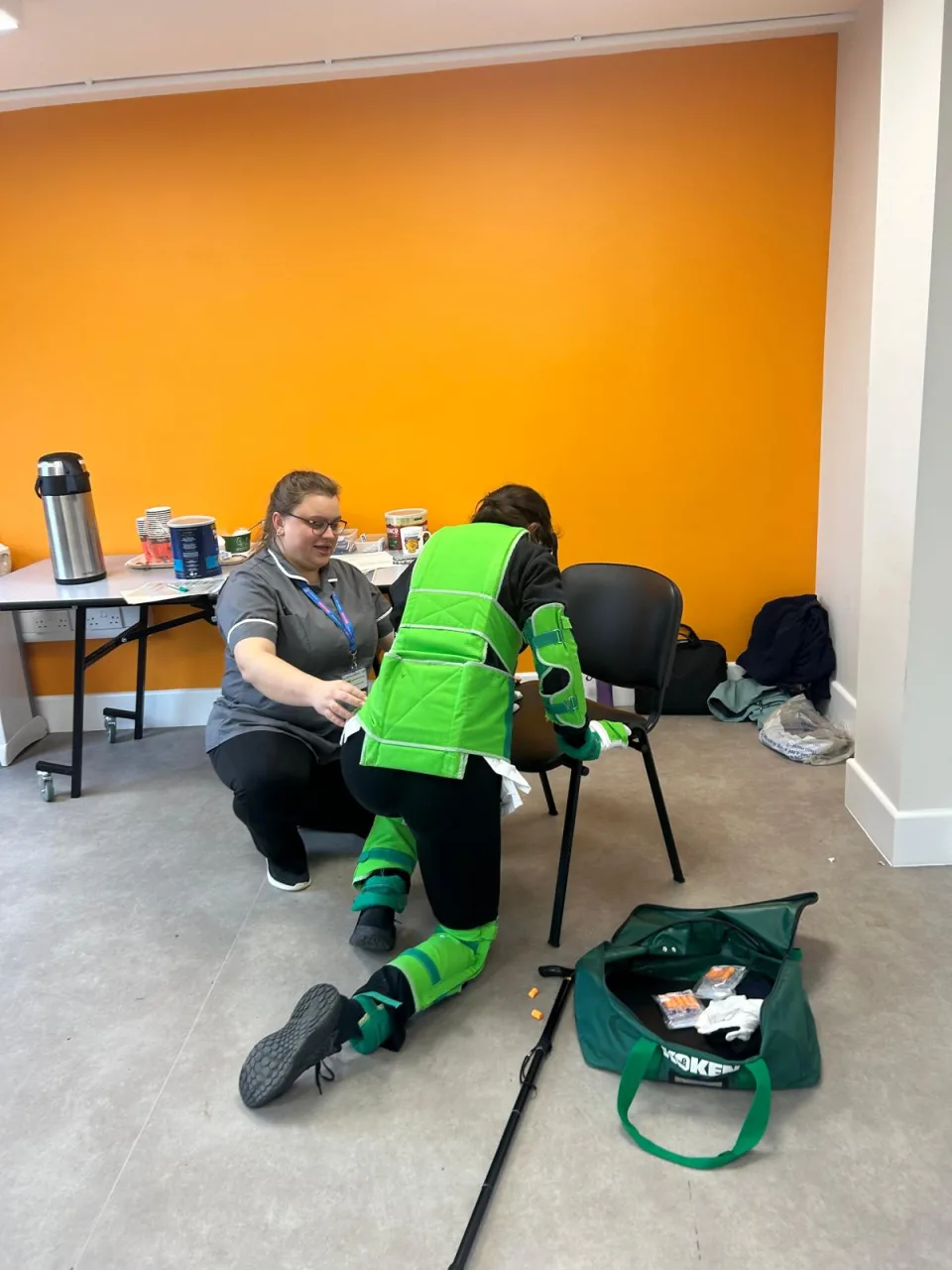
- How hard it is to get up and down with weakened muscles
- How tricky opening blister packs or dosette boxes with stiff, numb fingers can be
- How frightening it is to take steps up or down with limited eyesight
- How common household items, such as carpets and rugs, can pose trip hazards
The professionals are able to view typical challenges from a different perspective and are re-designing their assessments and therapies to better suit the needs of their patients as a result.
The ‘Older Adult Patient Experience’ was developed by physiotherapist, Belinda Twissell, with support from her colleagues at Oxford Brookes University, where she works as a Senior Physiotherapy Lecturer, and Buckinghamshire Healthcare NHS Trust, where she has a practice development role.
We’re delighted to have been able to support Belinda and her team in developing these courses, including by providing different sizes of simulation suits for learners to try during the sessions.
While Belinda has been using simulation for many years to teach pre-reg students at the university, it wasn’t used in her community-based physiotherapy role at the healthcare trust.
After receiving some funding to look at training in the workplace, she was able to develop a series of simulation-based workshops for the trust’s multidisciplinary Adult Community Rapid Response and Intermediate Care and Urgent Community response teams, using the Koken Age Simulation Suit.
The sessions have been created to further understanding of:
- Delirium and dementia
- Functional mobility and rehabilitation
- Identifying deteriorating patients
- End of life care
- Falls and post hypertension
- Older experience and frailty
The benefits of simulation training for multidisciplinary community teams
Belinda said: “I’m fortunate in that I work part-time for both Oxford Brookes University (OBU) and Buckinghamshire Healthcare NHS Trust (BHT). BHT don’t own any Koken Age Simulation Suits, however, our team at OBU generously allows me to use them, provided they’re not being used.
“Unlike our pre-registration physiotherapy students, my colleagues at BHT haven’t previously had any exposure to simulation training, and I find that training I’ve developed using the age suits provides a non-threatening way into the use of simulation for learning.
“I had a look at what some of the teams were struggling with, such as identifying when someone was deteriorating at home and supporting patients with dementia and delirium, and developed the training around those.
“The trust have been able to create a community simulation room with a sofa, carpets and rugs, which has also really helped the experience.
“The training has meant that teams have realised just how tiring and difficult to concentrate it may be for some of our patients and, for example, considered adjustments to the time they allow to carry out initial assessments.
“The feedback we get is that people find this method of interactive learning effective and that it’s a great way to share best practice across the county.
“Overall, participants come away with a deeper appreciation of the fear, fatigue and anxiety associated with mobility and sensory impairments, as well as increased empathy for their patients.
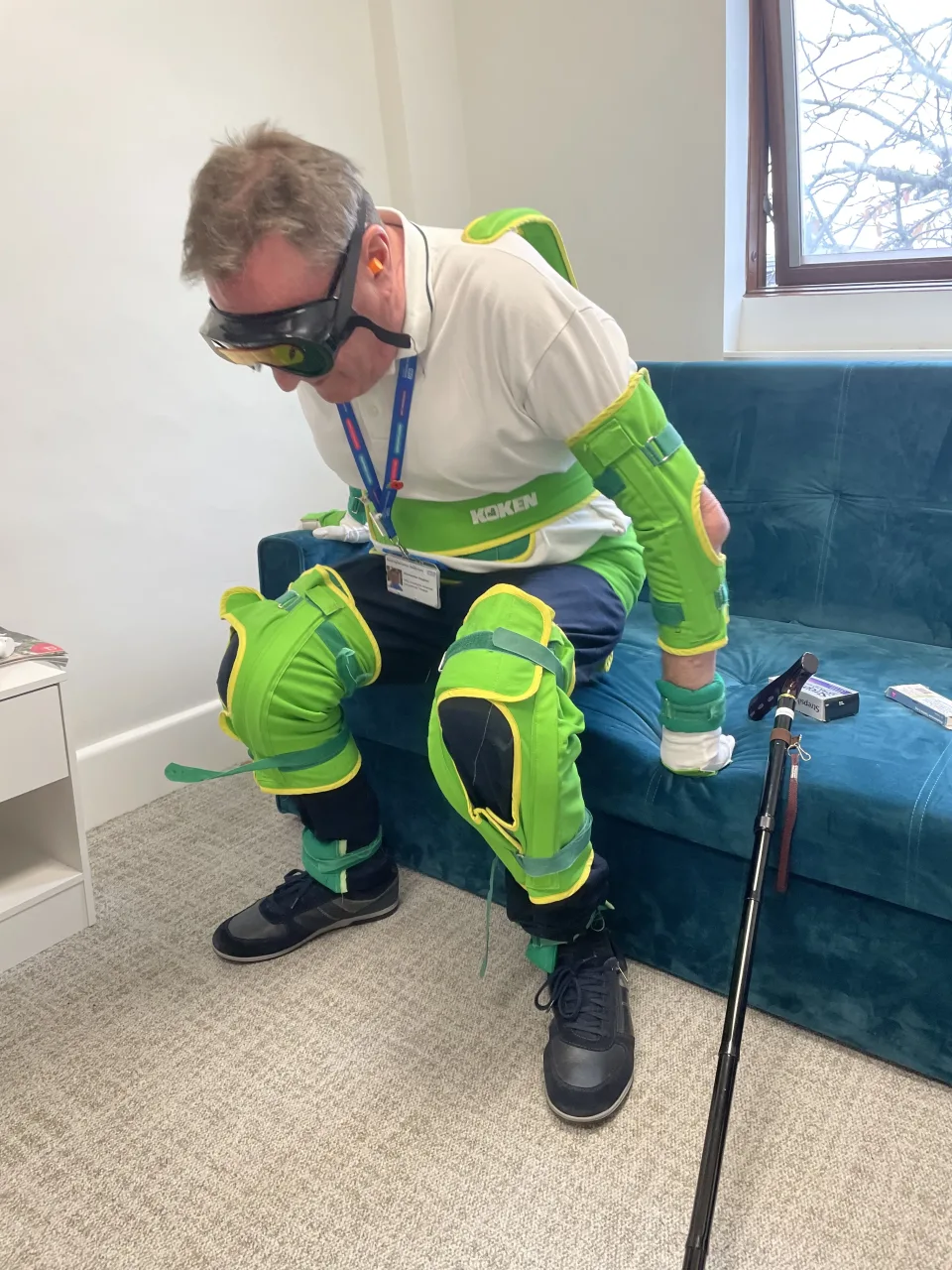
“It has been a privilege to enable our community teams to experience simulation-based learning to support the delivery of safe care for our elderly patients.”
Supporting transformative simulation-based training
Adam,Rouilly Director of Sales and Marketing, Tariq Shahab, said: “This is a perfect example of how partners can collaborate and co-produce simulation-based training in a way that has a direct impact on the outcomes and experiences of patients.
“By working together, we have been able to help introduce simulation to teams in the community who have never experienced it before.
“And this is the focus for the future of simulation in medical education – considering how we can turn good simulations into transformative simulations.
“This will be top of the agenda at next month’s ASPiH Conference, which has the theme of Simulation for Impact – Culture, Co-production.
“Because the ASPiH values align so closely with our own, we’re delighted to be Gold Sponsors for this year’s event in Bournemouth and we’re really looking forward to advancing that agenda together with industry peers, medical professionals, students, and education suppliers.”
If you’d like to connect with the Adam,Rouilly team at ASPiH, where we’ll also have a selection of our products on display, we’d love to hear from you.
Members of the team have shared their thoughts on what to expect from the ASPiH 2025 event for anyone who is thinking of attending.
And if you can’t make it this year, but would like to talk about medical education solutions for your organisation, our Sales Team is always on hand to help.
