
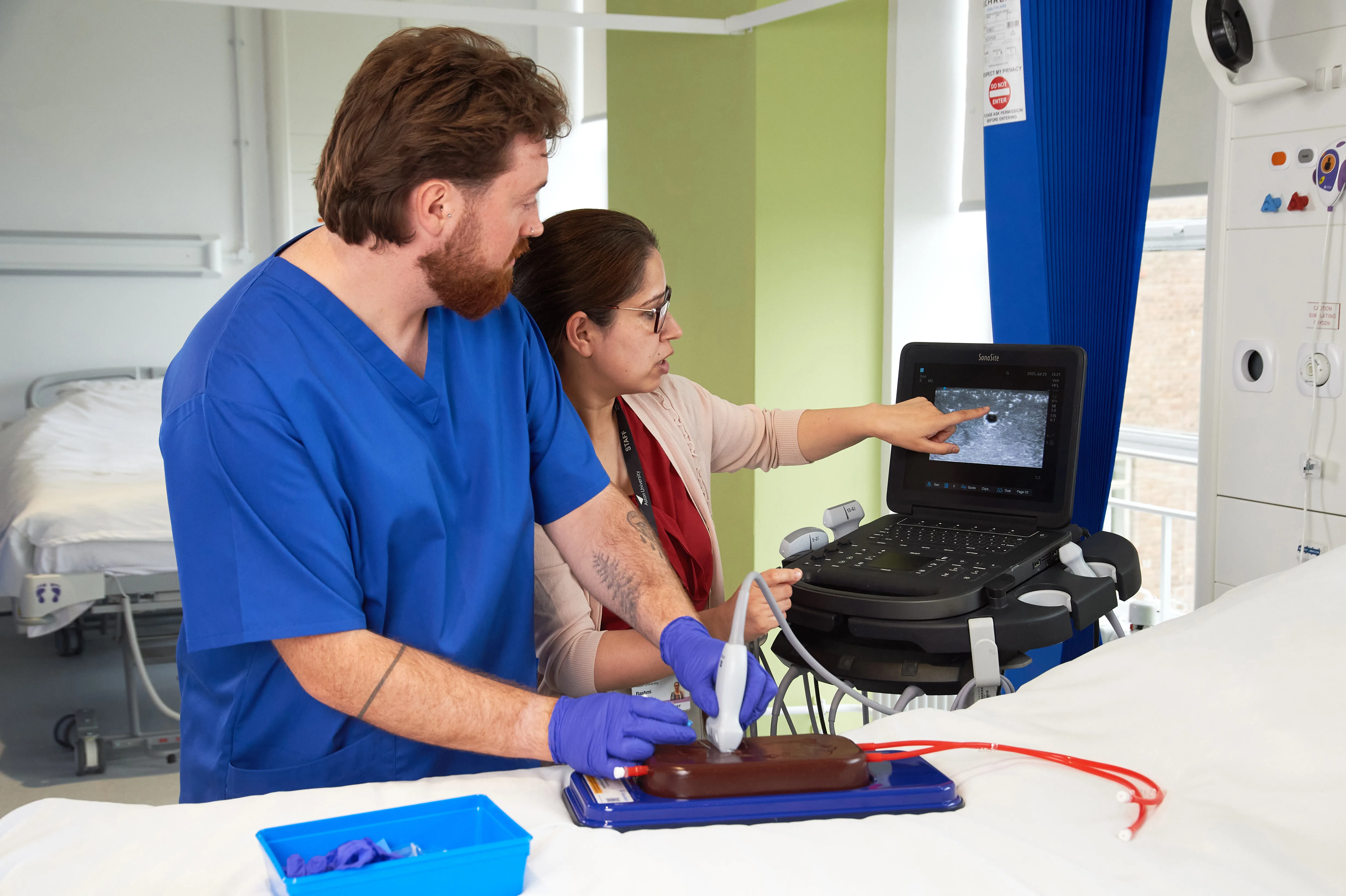
Dr David Cloete is a Consultant in Emergency Medicine and the Emergency Point of Care Ultrasound (POCUS) Lead at Oxford University Hospitals NHS Foundation Trust. He is also a Teaching Associate at Green Templeton College, Oxford University, and a committee member of the IFEM/ESICM/EUSEM/EMSSA Ultrasound Committees and the Director of SONOX – the Oxford Sonography Initiative. As part of Adam,Rouilly’s ongoing work with healthcare educators, we spoke to Dr Cloete to better understand the challenges facing point-of-care ultrasound education and training, and what is needed to support clinicians developing these increasingly important skills.

As POCUS becomes an increasingly important part of healthcare, attention often focuses on technology. However, the greatest challenge is not the equipment itself, but ensuring healthcare professionals have the education, supervision, experience and confidence to use it effectively.
For clinicians, developing competence in POCUS requires much more than learning how to operate the equipment. It requires access to experienced trainers and opportunities to practise and develop skills over time. Yet providing that learning environment presents a significant challenge.
When clinicians lack confidence teaching ultrasound, the effects extend far beyond the classroom.
Investment in equipment becomes more difficult to justify. Protected teaching time is harder to secure. Most importantly, learners can struggle to find experienced supervisors who can observe scans, provide meaningful feedback and formally assess competency.
The scale of this challenge is reflected in published research. A review published in the British Journal of Hospital Medicine reported that, in the two years following the launch of the Focused Acute Medicine Ultrasound (FAMUS) accreditation programme, only around 20% of those who had attended a course went on to achieve full accreditation. Lack of equipment, supervision and protected time for scanning were among the barriers identified.
Perhaps more significantly, similar challenges recur across different specialties, suggesting this is not an isolated problem but a wider issue for ultrasound education.
The challenge, therefore, is not simply technological. It is educational.
The Educational Gap
Dr Cloete believes part of the challenge can be traced to the UK’s comparatively late adoption of point-of-care ultrasound training. Drawing on his experience working in South Africa and his involvement in international ultrasound committees, he has seen how other countries introduced ultrasound into clinical training earlier, placing particular emphasis on robust credentialing. Many have also incorporated POCUS education into undergraduate training.
Many senior clinicians in the UK completed their specialist training before point-of-care ultrasound became established within postgraduate curricula. Today’s trainees, however, are increasingly expected to demonstrate competence in ultrasound before completing their own training.
The difficulty is obvious. Who teaches a skill that previous generations were never expected to learn?
To illustrate the challenge, Dr Cloete used a memorable analogy. Imagine introducing heart transplantation into a consultant’s curriculum after they had already qualified, then expecting them to supervise trainees performing the procedure.
Although deliberately exaggerated, the comparison illustrates an important point. Clinical expertise does not automatically translate into confidence teaching newly introduced practical skills.
As Dr Cloete observed: “People shy away from things they’re not comfortable with.”
This can have a knock-on effect. If senior clinicians are unfamiliar or uncomfortable with ultrasound themselves, gaining support for training, simulation equipment and investment in ultrasound technology can become more difficult.
At the same time, trainees who need to develop ultrasound competencies can find themselves without the required mentors and supervisors to support their progress.
Learning Before the Bedside
This is where simulation and carefully structured education have the potential to make a lasting difference.
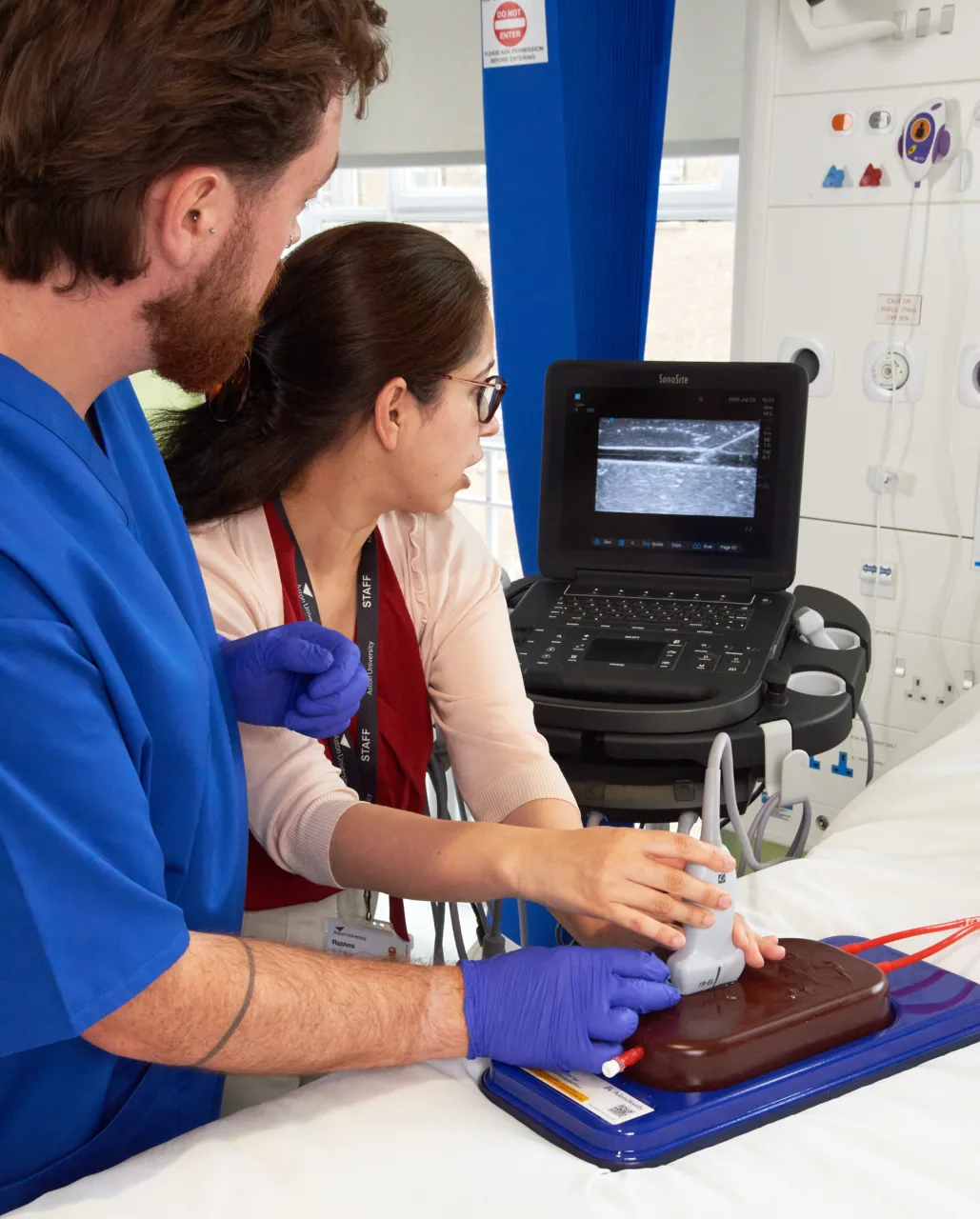
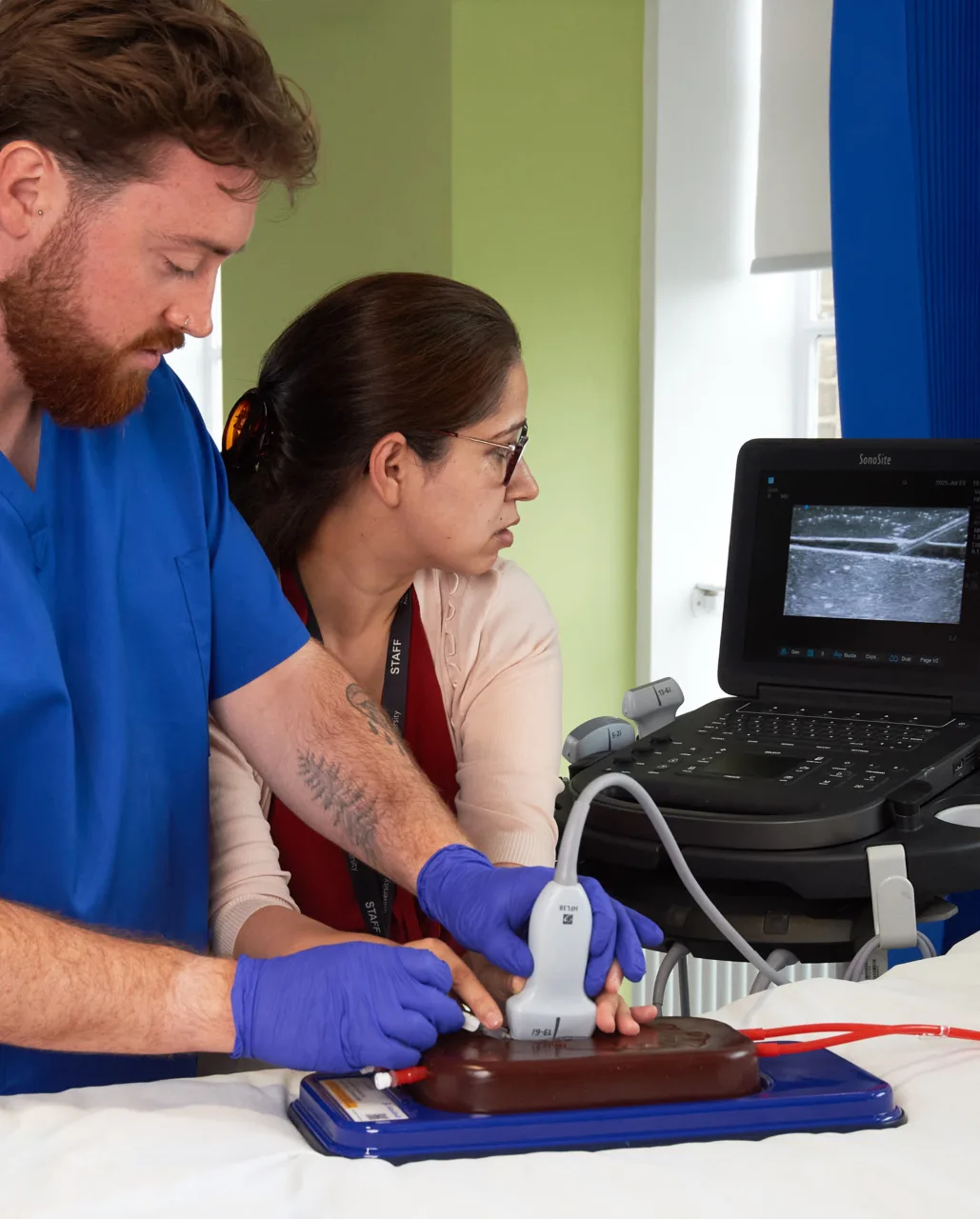
Simulation allows learners to develop practical scanning skills before they encounter patients. Image acquisition can be practised repeatedly, procedures can be refined and mistakes become learning opportunities rather than clinical risks.
Importantly, simulation is not intended to replace clinical experience. Instead, it can help learners build familiarity and confidence before applying their skills with patients.
Dr Cloete has witnessed this educational shift first-hand. Recognising that delegates consistently wanted more practical scanning time, he and his colleagues moved much of the theoretical content online before participants attend, allowing face-to-face teaching to concentrate on hands-on scanning, feedback and developing practical confidence.
The published research points towards similar opportunities. Online learning resources and remote supervision are among the approaches being explored to extend access to training, particularly where experienced instructors are limited.
For Dr Cloete, the principle is straightforward: “You learn more by doing than watching.”
Creating the Next Generation of Educators
Yet one of the most significant challenges facing ultrasound education may not be a shortage of learners. It may be a shortage of educators.
The published evidence supports that concern. A lack of available trainers has been identified across UK specialties attempting to deliver ultrasound competencies, with much of the teaching dependent on the goodwill of a relatively small number of experienced clinicians. This makes developing sustainable training pathways particularly difficult.
Clinicians can complete an ultrasound course and return to work enthusiastic about developing their skills, yet still struggle to progress because there is nobody available locally to supervise examinations, provide structured feedback or sign off competency.
Recognising this, Dr Cloete is investing in developing instructors as well as teaching learners. He is running dedicated train-the-trainers days to help expand the pool of quality instructors available to support ultrasound education.
By creating more educators, healthcare organisations can create more opportunities for learners.
It is a simple idea, but potentially one of the most important steps towards embedding point-of-care ultrasound more consistently across UK healthcare.
What Needs to Change?
Increasing the number of experienced educators is an important starting point, but it is only part of the answer. Clinicians also need protected opportunities to learn.
At his own hospital, Dr Cloete has secured dedicated time within his job plan to provide ultrasound training, supervision and opportunities for trainees to work towards the practical sign-offs required by their curriculum.
This matters because completing an ultrasound course is only the beginning of the learning journey.
A clinician can attend a course, acquire the fundamentals and return to work enthusiastic about putting their new skills into practice. But without someone alongside them who can observe, advise and assess their progress, developing proficiency becomes much more difficult.
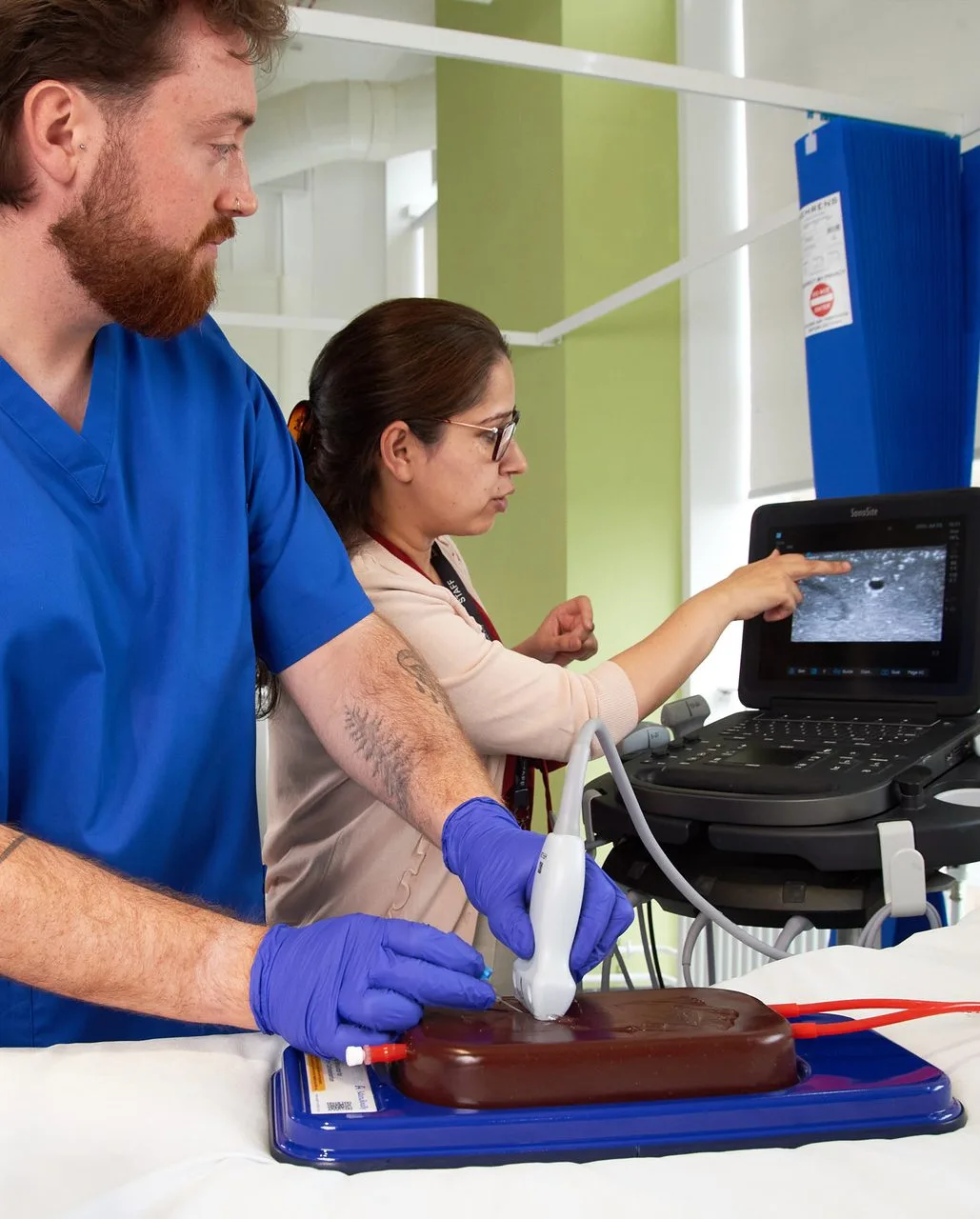
Simulation can help bridge part of that gap, providing opportunities for repeated practice in a realistic environment before those skills are transferred to patients.
There is also an argument for making better use of valuable face-to-face teaching time. Dr Cloete’s approach of delivering theoretical learning before a course allows learners to arrive prepared and spend more time scanning. Online learning, group teaching and remote supervision could similarly help extend the reach of a limited number of experienced educators.
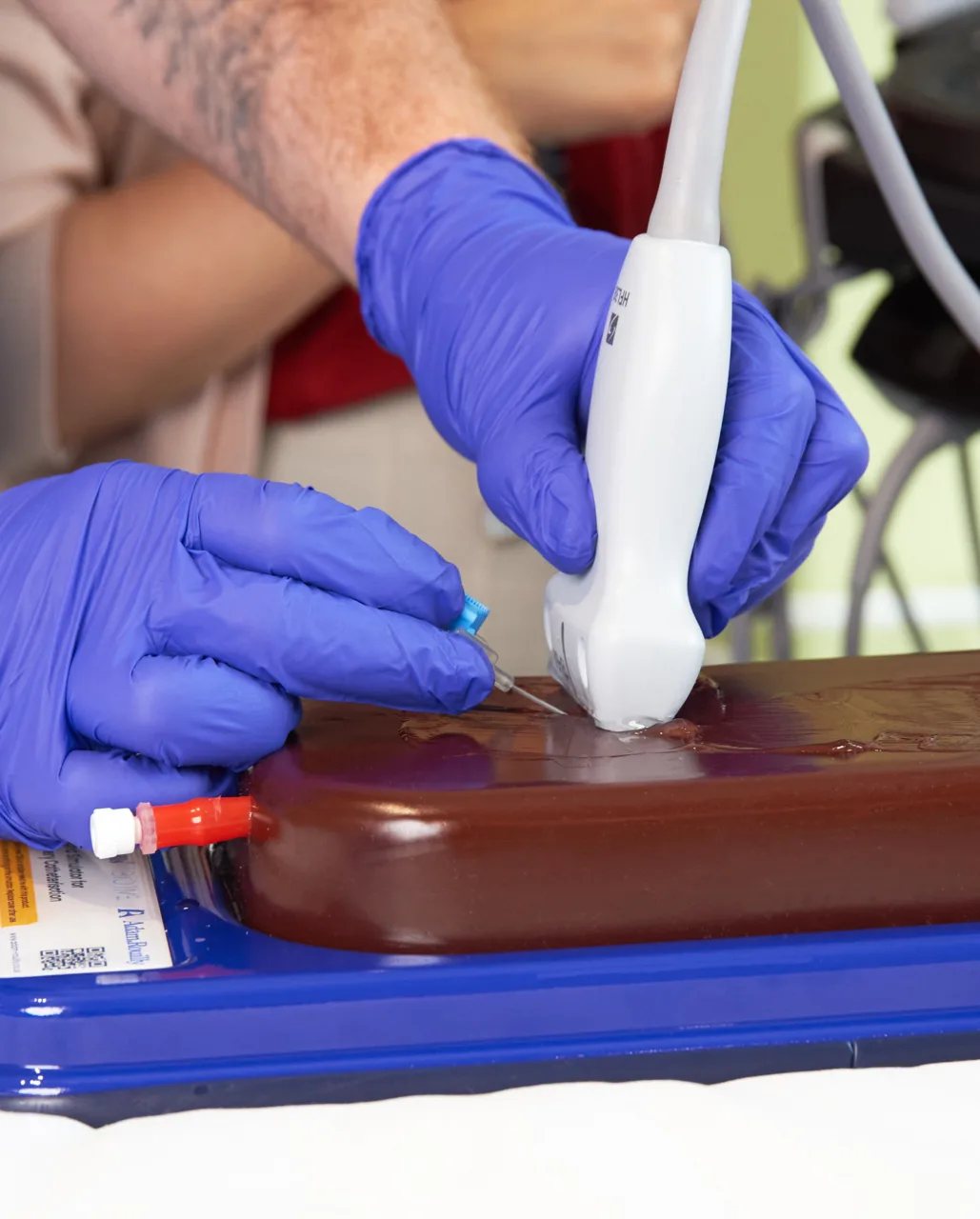
But education also requires organisational support. Dr Cloete recalled presenting the case for ultrasound to senior directors at his hospital. One openly told him that he had never used ultrasound and never intended to. Yet, after seeing the evidence and understanding its potential benefits, he supported dedicated time for ultrasound education.
That experience highlights another important part of the solution. It is not enough to create enthusiasm among learners. Those responsible for allocating time, resources and investment also need to understand why ultrasound education matters.
Ultimately, sustainable progress is likely to depend on a combination of trained educators, protected learning time, simulation, flexible approaches to teaching and collaboration.
It is here that partnerships can make a meaningful contribution. Dr Cloete specifically highlighted the importance of having quality instructors complemented by high-fidelity equipment as he expands his courses, including resources supported by Adam,Rouilly. Working alongside clinicians and educators provides an opportunity not simply to supply simulation equipment, but to support the practical learning environments in which skills and confidence can develop.
Looking Ahead
Point-of-care ultrasound has already demonstrated its clinical value.
The challenge now is ensuring healthcare professionals have access to high-quality education, experienced mentorship and meaningful opportunities to develop practical competence.
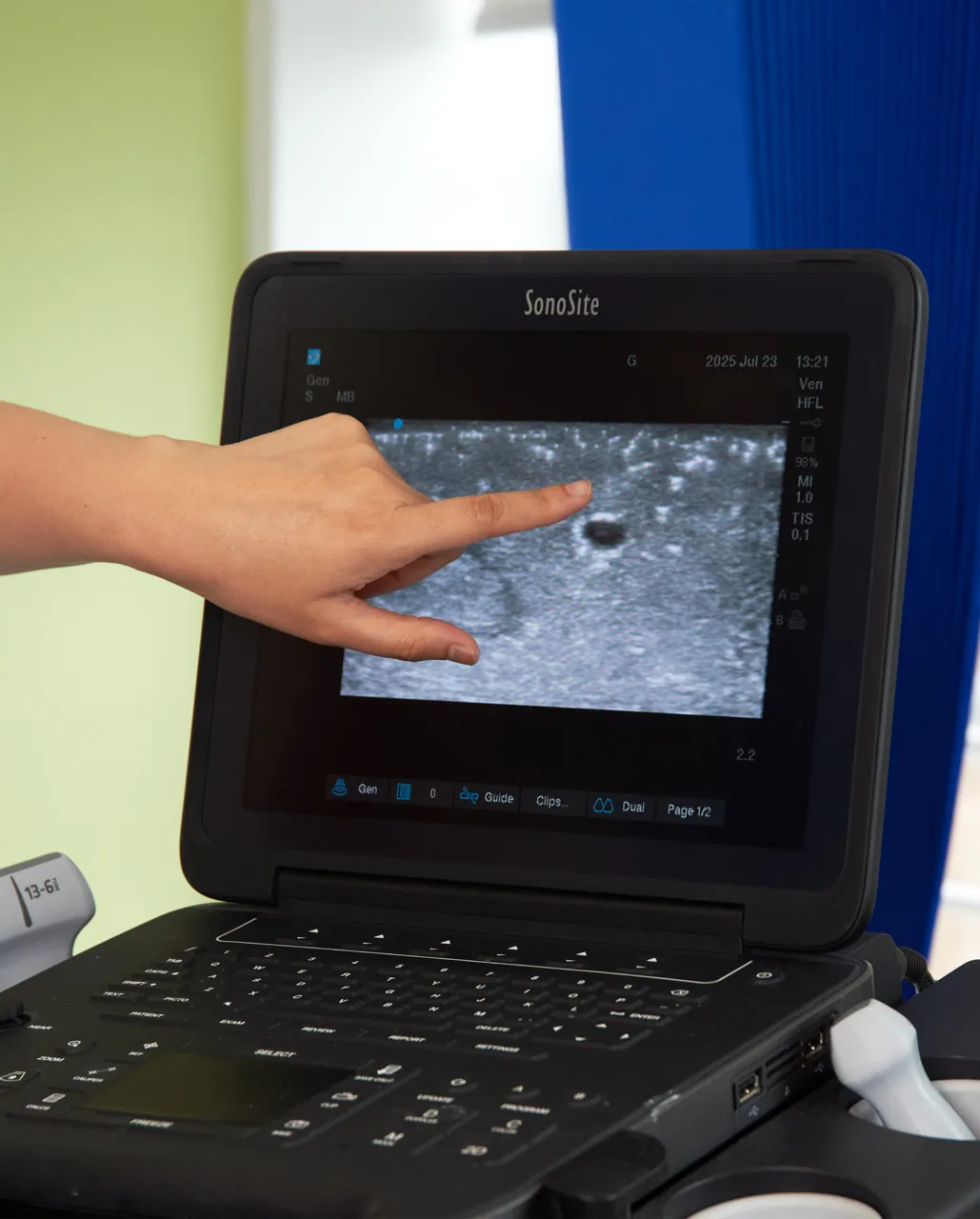
Simulation is already paving the way, giving clinicians the space to practise, make mistakes and build confidence long before they pick up a probe at the bedside.
Dr Cloete noted: “Simulation allows us to make mistakes so that our patients never have to experience them.”
However, none of these advances will achieve their full potential without the educators who inspire confidence, supervise learning and help translate knowledge into safe clinical practice.
Perhaps that is the most important lesson from both the published evidence and Dr Cloete’s experience.
The future of point-of-care ultrasound will not be determined by the scanners we buy. It will be shaped by the educators we support.
Supporting ultrasound educators
We work alongside clinicians and course directors to create realistic, hands-on environments where ultrasound skills and confidence can develop. If you’re building or expanding an ultrasound training programme, please get in touch with our Sales Team.
References/Further Reading:
O’Sullivan, L. and Smallwood, N. (2025). Is Point of Care Ultrasound Worth the Bother? British Journal of Hospital Medicine. DOI: 10.12968/hmed.2024.0909.
Tandon, A. et al. (2024). A national survey on the use of ultrasound as an educational tool to complement anatomy teaching at UK medical schools. Clinical Anatomy. DOI: 10.1002/ca.24229.
