

As we mark World Diabetes Day 2026, diabetes remains a growing global health challenge, placing increasing demands on healthcare services. According to Diabetes UK, almost six million people in the UK are estimated to be living with diabetes, including approximately 1.3 million who may have undiagnosed type 2 diabetes.
With this year’s campaign highlighting the theme Early Action on Diabetes, early diagnosis, effective monitoring and timely access to care remain key priorities.
For healthcare educators, the growing prevalence of diabetes reinforces the need to equip students and professionals with the clinical knowledge, technical skills, judgement and confidence to recognise symptoms, assess patients and identify potential complications.
Diabetes UK’s 4Ts campaign highlights four important warning signs of type 1 diabetes: Toilet, Thirsty, Tired and Thinner. While recognising these symptoms is essential, particularly as type 1 diabetes can develop rapidly, early identification is equally important for type 2 diabetes, where symptoms may be subtle or develop gradually.
Recognising the signs is an important first step, but effective diabetes care also relies on a range of clinical skills, from accurate blood glucose monitoring and insulin administration to identifying potential complications. Our range of clinical skills simulators supports hands-on training across these important areas of diabetes care.
Developing blood glucose monitoring and interpretation skills
Blood glucose monitoring is a critical clinical skill in diabetes assessment and management. Obtaining a reliable reading requires correct technique, appropriate infection prevention measures and an understanding of the testing process. Equally important is the ability to interpret results alongside the patient’s symptoms, medical history and treatment, particularly when identifying potential hypoglycaemia or hyperglycaemia.
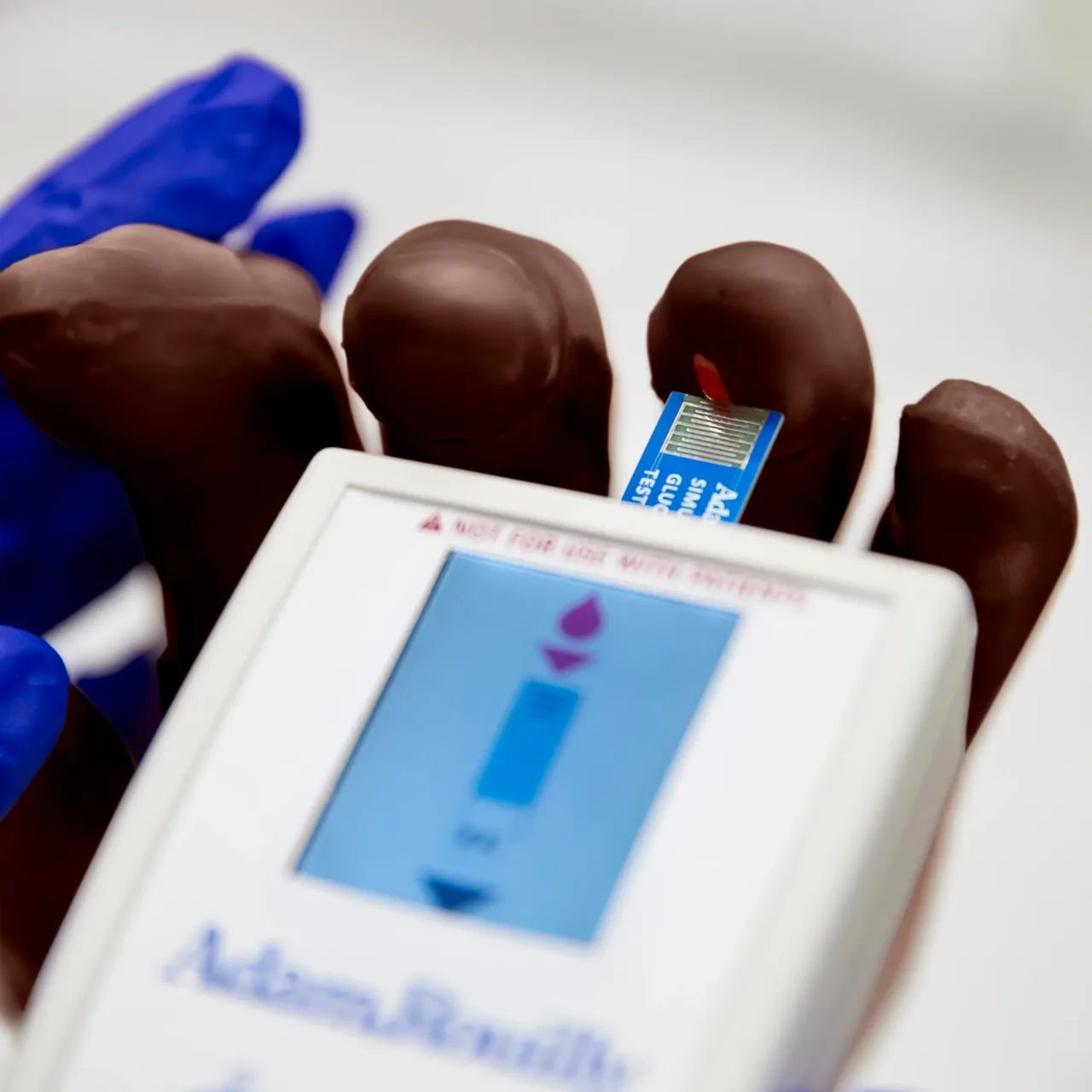
Our Glucohand® Digital Glucometer Simulator, available in light and dark skin tones, enables learners to practise simulated finger-prick blood sampling and blood glucose testing.
Featuring refillable finger pads, simulated test strips and a digital glucometer, Glucohand® also allows educators to programme low, normal, high or randomised glucose readings.
This enables learners to develop their procedural skills while interpreting different results, recognising potential concerns and considering appropriate clinical responses, all within a safe, comfortable and repeatable training environment. Re-usable simulated test strips and finger tips which allow repeated lancet practice, keep overall operating costs of the trainer down, versus using control solutions and single-use test strips.

Practising insulin administration and injection skills
For people requiring insulin therapy, correct administration procedures are key to safe and effective diabetes management.
Healthcare professionals need to understand different injection techniques, appropriate site selection and the importance of rotating injection sites to reduce the risk of complications such as lipohypertrophy.
Our Advanced Injection Belly supports training in subcutaneous injections, insulin pen use and insulin pump infusion set placement, allowing learners to practise in a controlled environment. It can also support patient education, helping healthcare professionals demonstrate correct procedures.
Recognising diabetic retinopathy and understanding eye health
Diabetic retinopathy is a serious sight-threatening complication of diabetes, caused by damage to the small blood vessels in the retina.
As retinal changes can develop without noticeable symptoms, regular diabetic eye screening is essential for identifying abnormalities before significant vision loss occurs.
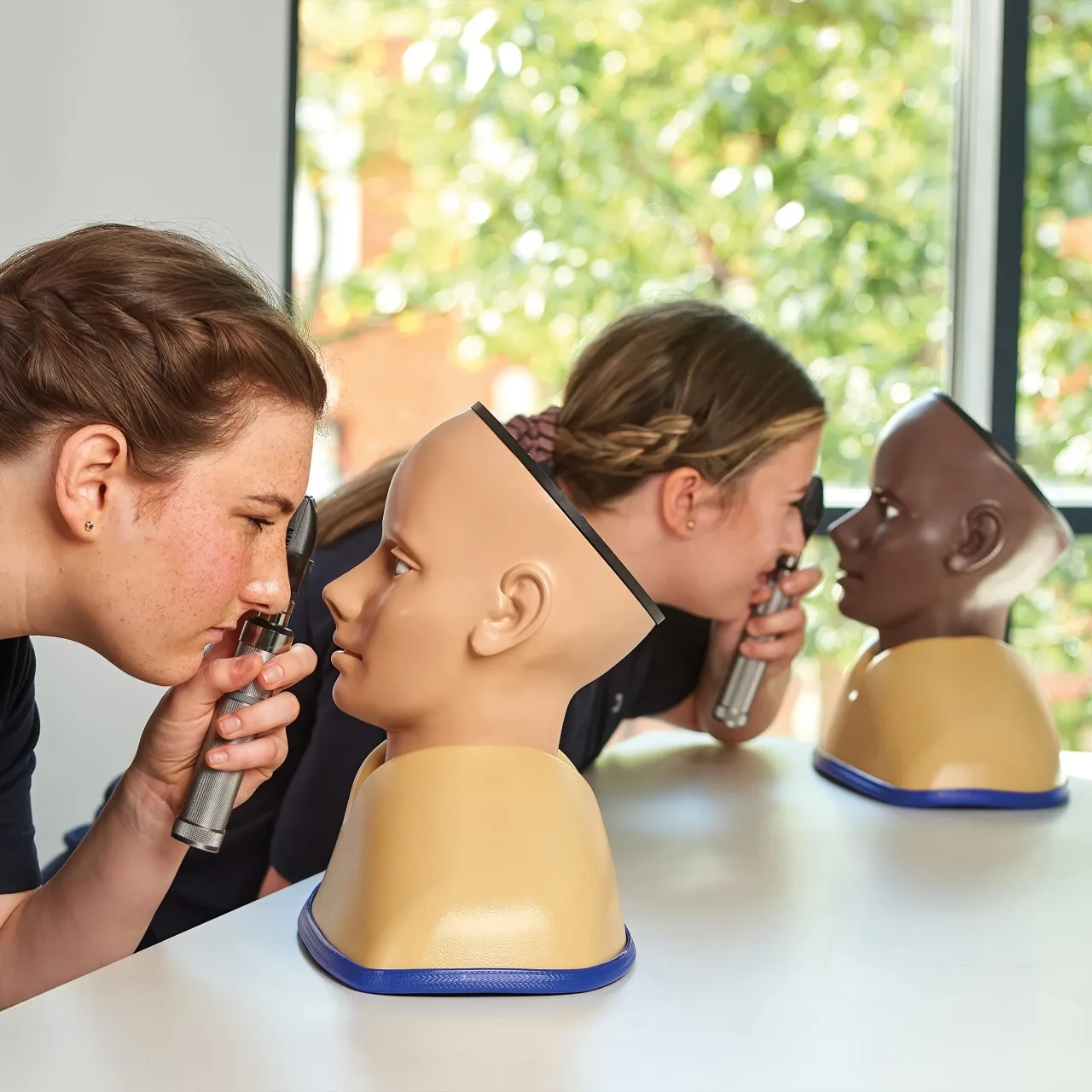
Our Enhanced Digital Eye Examination/Retinopathy Trainer, available in light and dark skin tones, incorporates eight diabetic retinopathy conditions, enabling learners to examine a range of simulated retinal abnormalities.
Importantly, the dark skin tone version represents these conditions against darker fundus pigmentation, helping learners understand how variations in retinal appearance can influence clinical observation.
Both trainers support inclusive eye examination education, helping learners develop their observational skills and familiarity with diabetes-related retinal conditions.
Supporting diabetes education through simulation
World Diabetes Day 2026 reinforces the importance of early action and the role of clinical education in preparing healthcare professionals to deliver effective, patient-centred care.
Our range of clinical skills simulators supports hands-on training across blood glucose monitoring, insulin administration and the recognition of diabetic retinal changes, helping learners develop essential skills and confidence in a safe, repeatable learning environment.
For more information on our blood glucose monitoring and diabetes training products, or to discuss your training requirements, please get in touch with our team.
Related Articles:
