
Explore how Adam Rouilly supports Good Care Month with advanced training tools for stoma, colostomy, ileostomy and urostomy care education.
According to Colostomy UK, one in 335 people in the UK are living with a stoma – around 200,000 individuals.
Caring for someone who has undergone this life-changing procedure requires specific knowledge and skills.
For healthcare professionals, training often takes place in traditional educational settings. But stoma or ostomy care extends far beyond hospitals and clinics, reaching residential homes, specialist schools, community care and patients’ own homes.
We’re spotlighting this vital aspect of care as part of July’s Good Care Month, which recognises the essential role played by carers in society.
Ensuring those 200,000 people and their carers have access to high-quality teaching aids is key to helping them develop confidence and competence in stoma management.
Through hands-on practice, with lifelike models, we can ensure that excellent stoma care is available to all who need it, regardless of their age, circumstances, or care setting.
Understanding stoma and ostomy care

The terms ‘stoma’ and ‘ostomy’ are often used interchangeably, though they have distinct meanings. A stoma is the opening on the abdomen’s surface, surgically created to divert faeces or urine outside the body, while ostomy refers to the surgical procedure creating that opening.
There are three main types: colostomy, ileostomy and urostomy, each with specific care requirements.
Learning stoma management skills takes time and practise. The skin around the stoma needs careful attention to prevent soreness, bags require regular changing using proper technique, and complications like leakage, ballooning, or skin irritation need to be quickly recognised and addressed.
Teaching methods must adapt to individual needs; babies and children, the elderly, or those with disabilities or learning difficulties all require different approaches.
Medical task trainers for stoma care
The diversity of settings and patient circumstances require high-quality, flexible training solutions. The range of manikins and task trainers we make and supply for stoma care has been designed to meet these varied needs.
As well as the technical skills needed to care for a stoma, our models are perfect for educating patients before surgery too. Understanding what will happen during and after the procedure, and what their day-to-day life with a stoma will look like, is a vital aspect of patient care.
Being able to visualise, understand, and prepare for this life-changing procedure in advance can help patients and their carers feel less anxious and adjust to their new circumstances.
Whether it’s a portable torso in a handy carry case, transparent model showing internal anatomy, paediatric training doll, full size nursing doll, or a wearable colostomy pouch simulator, we offer solutions for every learning scenario.
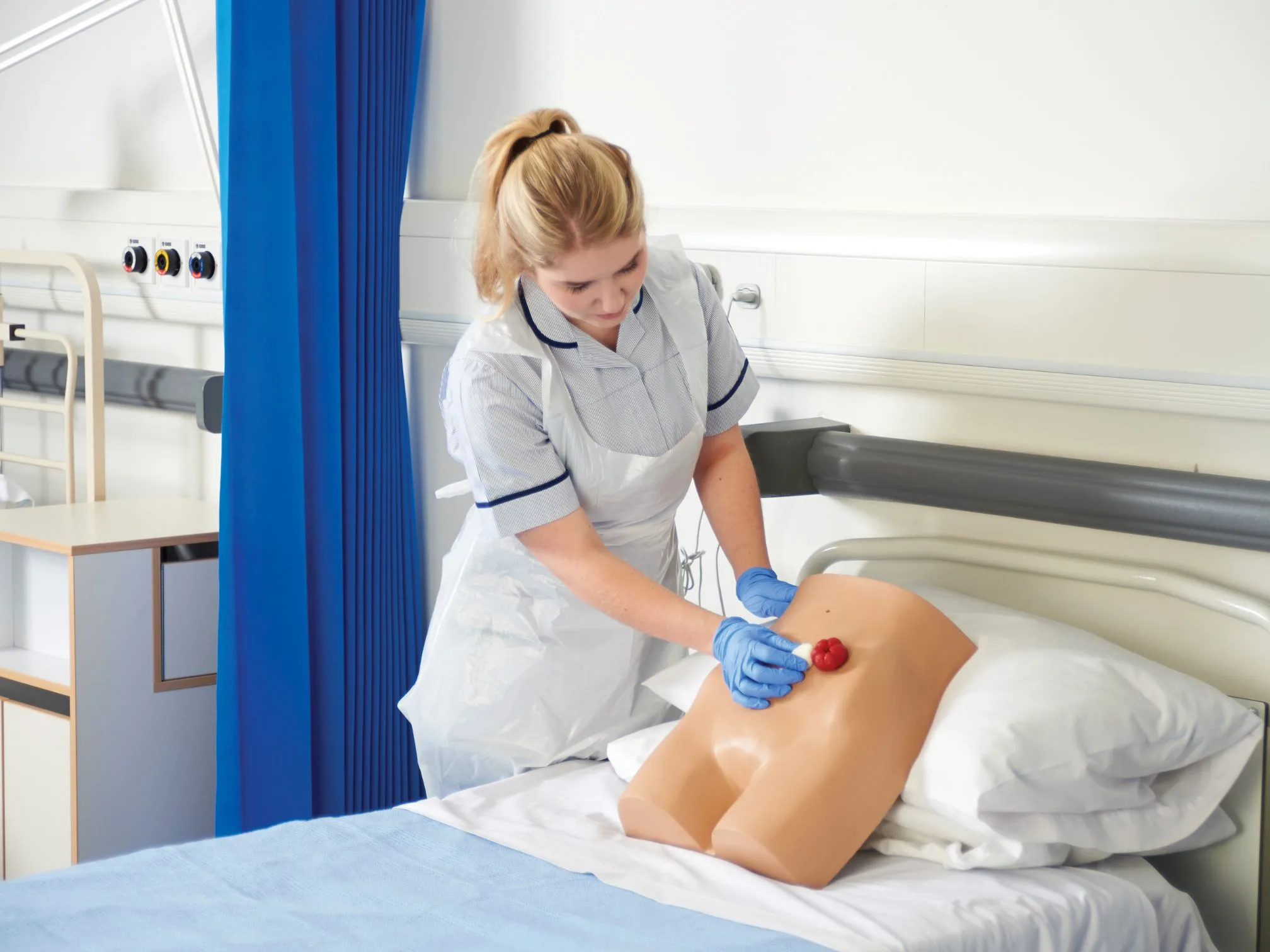
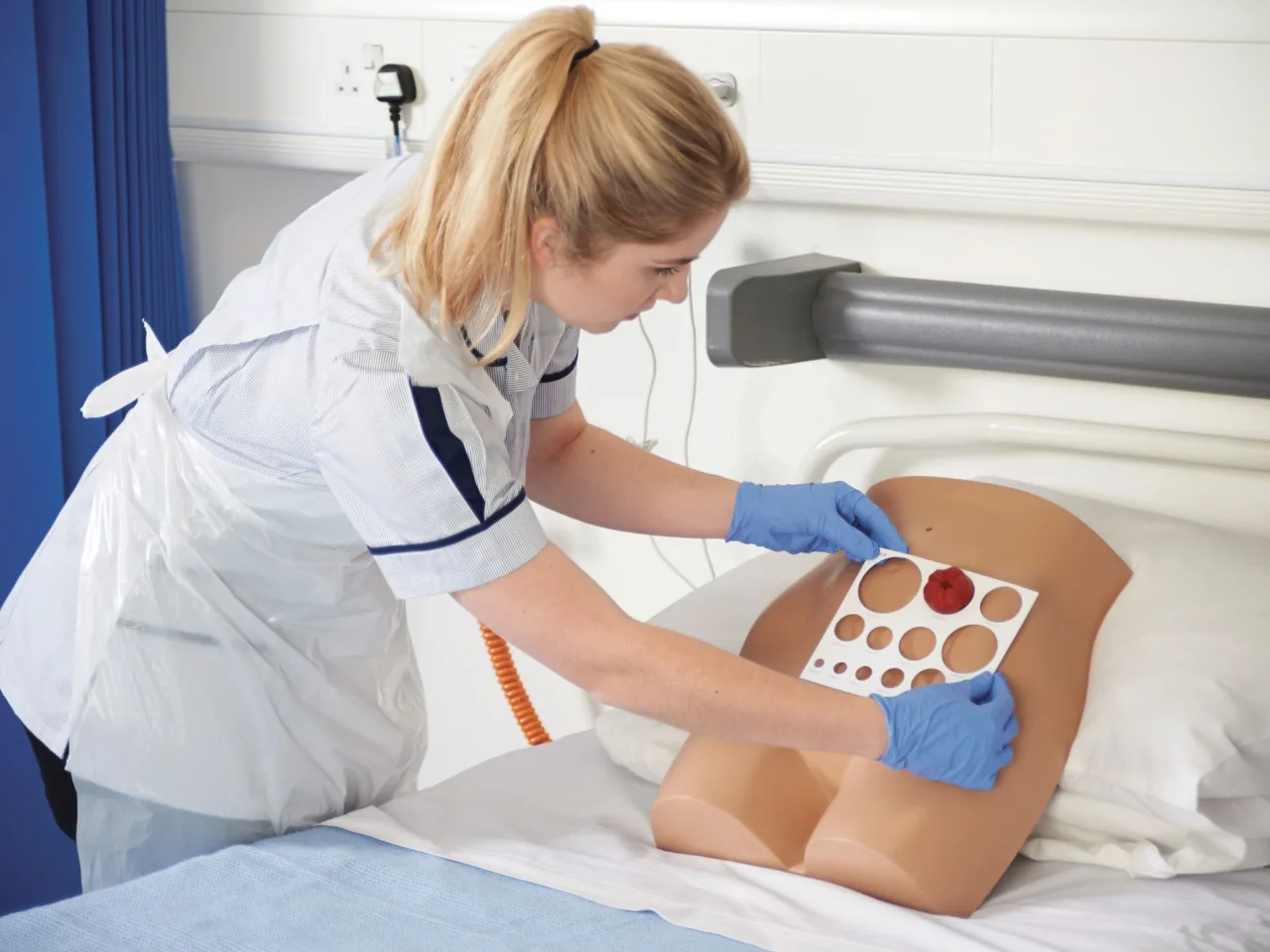
One of the most popular and affordable stoma care teaching aids is the Adam,Rouilly Stoma Care Torso supplied with a portable carry bag.
Our continued investment in the latest materials and production methods has allowed us to create our most realistic stomas, both in look and feel.
While its capabilities are extensive, including five interchangeable types of stoma, the Stoma Care Torso is incredibly easy to set up and use, making it the perfect model for both healthcare professional and patient training.
Popular stoma care training aids include:
- Stoma Care Torso – Easy-to-use, affordable and portable with five interchangeable stoma types. It has been improved to be closer in size to an adult, and is perfect for training healthcare professionals and patients.
- Otto Ostomy™ Model Advanced – Unique transparent torso to help reduce patient anxiety about a stoma operation, and life with a stoma. Its 3D digestive and urinary tracts show the location and functions of the various organs, with openings for the insertion of stomas.
- Otto Ostomy™ Standard Stoma Model – Ex-demo model available at a significantly reduced price. Moulded from a patient CT scan, this transparent model features 3D removable organs, and can demonstrate ostomy placement. It’s an excellent teaching aid, especially where cognitive processes or language may be an obstacle.
- Bedford Doll – Male and female full-body nursing dolls with stoma capabilities for basic and advanced techniques, perfect for lifelike teaching in an educational setting. The soft, palpable and washable skin ensures realism and excellent durability.

Wearable ostomy pouch simulator

The wearable Ostomy Pouching Trainer™ is an excellent teaching aid to help healthcare professionals and patients understand and practise the techniques involved in wearing and changing an ostomy pouch.
It straps around the waist and includes four different types of stoma with simulated stool and urine for a realistic experience. Patients can learn about maintaining healthy skin and preventing complications, as well as the hand-eye co-ordination needed to change pouches.
The wearable pouch simulator is the perfect companion to a stoma model, allowing all parts of the process to be taught and practised, particularly prior to surgery.
Stoma care in babies and children
Ostomy training is a key part of helping patients and their carers come to terms with this life-changing procedure, and to manage it safely.
A variety of teaching aids, such as manikins and task trainers, are vital to that process, for both pre and post operative care.
In babies and children, the teaching approach has to focus on the age and needs of the child, and on family members, who could be in shock or denial and not ready to take on new knowledge and skills.
The Global Paediatric Stoma Nurses Advisory Board guidelines for stoma care emphasises visual aids and dolls for both practical learning and psychological adjustment.
Top paediatric nursing dolls with stoma capabilities:
- Micro-Preemie Premature Baby Simulator – For infants requiring multiple medical interventions
- Special Needs Infant – Includes basic stoma care
- Hospital Training Baby with case – Easily portable option
- Child Nursing Doll – Lifesize model for comprehensive nursing procedures
Stoma care in people with additional needs
Lifelike models, visual aids and tactile learning become even more important where cognitive processes, visual impairment or language present a barrier to learning.
For people with dementia, for example, hands-on demonstration using small, simple steps with repetition is particularly effective.
Colostomy UK and Dementia UK have produced this guide on Caring for Someone with a Stoma and Dementia with more information.
Popular models for stoma training in geriatric care include:
- Basic Geri™ – Realistic elderly patient features with natural positioning
- Ostomy Pouching Trainer™ Model – Wearable device for practising proper pouching techniques, which is a brilliant teaching aid for many scenarios
Investing in budget-friendly training
As we celebrate Good Care Month, it’s important to recognise that excellence in care often depends on the quality of training and education.
By investing in realistic, versatile training aids, healthcare educators can ensure carers – whether paid or unpaid – develop the confidence to provide compassionate, skilled stoma care.
At Adam,Rouilly, we believe safety in training leads to safety in practice. We want training to be as budget-friendly as possible, so our skilled advisers will always work with you to maximise value from your available funds.
For more information about our range of stoma care training aids, contact the Adam,Rouilly team today.
